Categories
Blog

Taming the Spreadsheet Jungle: A Guide for Agency Ops Teams

It usually starts with a good intention.

A simple tracker for billable hours. A margin calculator. A project budget template that “just works.” But then—something happens.

One spreadsheet becomes five. Then ten. Then twenty, all with slightly different formatting, ownership, or version names like “_final_v2_LASTUSE_THISONE.”

Congratulations. You’re now managing your agency operations in a spreadsheet jungle.

And it’s slowing you down.

Why Agencies Rely on Spreadsheets (Until They Break)

Spreadsheets are flexible, familiar, and free. So it’s no surprise they’re often the go-to tool for solving urgent operational problems.

But over time, they create more issues than they solve:

  • No single source of truth — multiple versions across departments
  • Manual updates — prone to error, duplication, and omission
  • Siloed information — no visibility across finance, ops, and delivery
  • Lack of automation — reporting, billing, and approvals require extra steps

At some point, your operations team stops managing performance and starts managing files.

The Hidden Costs of Spreadsheet Sprawl

Let’s be honest: the spreadsheet jungle isn’t just messy. It’s expensive.

  • Time is lost chasing updates, consolidating data, and manually fixing errors
  • Invoicing gets delayed because time and cost data live in separate systems
  • Forecasting lacks accuracy due to incomplete or outdated inputs
  • Margin insights come too late to do anything about them
  • Risk increases as sensitive financial data gets shared across uncontrolled files

If you’re spending more time updating spreadsheets than making decisions, it’s time to reconsider your tools.

How to Replace Spreadsheets with Smarter Workflows

Moving away from spreadsheets doesn’t mean losing flexibility—it means gaining control. Here’s how leading ops teams are doing it:

1. Consolidate Data into One Platform

Instead of juggling multiple trackers, connect your delivery, time, and financial data into a single system. That means no more manual reconciliation or version control issues.

2. Automate Where It Counts

Recurring processes—like reporting, billing, and approvals—can be automated when data flows through structured systems. Free your ops team to focus on strategy, not spreadsheets.

3. Integrate with Existing Tools

Spreadsheets often fill gaps between disconnected tools. Replace that role by using a financial management platform that integrates with your CRM, PM, and time tracking tools.

4. Enable Real-Time Visibility

Dashboards and reports that update automatically give you a live picture of what’s happening—without waiting for the next spreadsheet upload.

5. Design Workflows That Scale

Spreadsheets don’t scale. What works for 5 projects doesn’t work for 50. A modern system adapts with your agency as you grow.

Why This Matters for Agency Ops Teams

Ops leaders aren’t just keeping the trains running—they’re critical to agency profitability, performance, and client satisfaction.

But when your workflow lives in scattered files and manual processes, you’re forced to operate reactively.

With the right systems:

  • You get ahead of billing, forecasting, and resource planning
  • You make decisions based on real-time data
  • You enable teams to work faster and with more confidence
  • You finally retire that “revenue-tracker-Q2_vFinal-FIXED.xlsx” file

How Our Platform Helps Clear the Jungle

Our financial management platform is designed to replace operational spreadsheets with automated, connected workflows that actually reflect how agencies work.

With it, you get:

  • Real-time reporting across jobs, clients, and regions
  • Built-in automation for billing, revenue recognition, and approvals
  • Seamless integration with your existing tools
  • A central hub for finance and ops—no spreadsheet stitching required

Ready to retire your spreadsheets?

See how our platform helps operations teams move from spreadsheet chaos to structured, scalable workflows—without losing flexibility.


Categories
Blog

Fast and Transparent Onboarding with Accountability

Adopting new agency efficiency software is a crucial financial decision, but the onboarding process often causes anxiety. Many platforms promise value but face delays and low engagement during implementation, leading to poor adoption.

At Accountability, we believe onboarding should be a catalyst that builds confidence and empowers teams from day one. We’ve invested in a proven approach to ensure a fast, transparent, and collaborative transition to our software.

How Agency Efficiency Software Ensures Smooth Onboarding

Getting started with a financial system doesn’t have to mean starting from scratch. Our onboarding process is built to align with agency workflows while reducing complexity and risk. Through a combination of structured planning, customizable tools, and real human support, we help clients hit the ground running.

Clear Project Plans That Keep Everyone on Track

A successful onboarding process starts with clarity. Our team collaborates with stakeholders to create a shared roadmap, outlining clear milestones with target dates, task ownership, and success outcomes.

This structured approach ensures all aspects are covered, from data validation to system walkthroughs and go-live preparation. The collaborative plan keeps agencies informed and engaged, eliminating uncertainty about the next steps.

Pre-Populated Templates That Speed Up Setup

Data migration is a major bottleneck when switching systems, particularly for teams moving from spreadsheets or outdated software. To ease this process, we offer pre-populated templates designed for specific data sets like vendor records, client contracts, billing codes, and time categories.

These templates minimize manual entry, ensure consistent formatting, and help teams visualize their existing data in our platform. This allows teams to focus on reviewing and deploying instead of spending weeks on reformatting.

Our experience helping agencies worldwide has shown us exactly where data migration slows down—and we’ve built tools to keep that from happening.

Personalized Training for Every Department

Effective software requires proper training. We customize our sessions for each department based on their specific workflows.

  • Finance teams focus on revenue recognition, job cost reporting, and vendor invoicing.
  • Operations teams address time capture, expense approvals, and billing cycles.

Each training is tailored to the client’s priorities and challenges, providing a relevant playbook for each team. Our experienced trainers bring real-world agency finance expertise to ensure practical, scenario-based learning.

Expert Guidance from Dedicated Implementation Specialists

Our onboarding team has successfully assisted hundreds of agencies in transitioning smoothly. Each new client is paired with dedicated implementation specialists who guide them through every phase, answer questions in real time, and provide strategic input.

This proactive guidance helps clients anticipate and avoid roadblocks, whether reconciling legacy billing models or aligning reporting structures. The result is a trusted partnership grounded in shared success.

Post-Launch Support that Doesn’t Disappear

Implementation continues beyond go-live, as real questions and refinements often arise afterward. Our support model ensures ongoing collaboration post-onboarding.

We maintain close contact with your team, monitoring progress, providing enhancements, and addressing change management challenges. As your agency evolves, we support your platform usage.

Clients also access a growing library of support resources, updates, and success tools to maximize their platform experience.

Why the Right Agency Efficiency Software Makes All the Difference

Onboarding isn’t just about flipping the switch but about building the foundation for sustainable, measurable efficiency. The smoother the setup, the faster your team can start using real-time data to drive decisions, manage costs, and forecast with confidence.

At Accountability, we’ve made it our mission to ensure that this foundation is laid quickly and clearly. With structured implementation, smart data tools, flexible training, and hands-on support, we’ve helped agencies around the world integrate our system into their operations with minimal disruption and maximum value.

When your agency efficiency software comes with an onboarding experience this transparent and supportive, the transition doesn’t feel like a hurdle—it feels like momentum.

Let’s make your transition simple, seamless, and powerful. See how quickly you can get started with Accountability.

Categories
Blog

Financial Data That Flows—From Job to Invoice to Margin

You’ve scoped the work. The job is live. Time’s being tracked.

Now comes the hard part: chasing the data across three systems, five spreadsheets, and one too many email threads just to figure out what to bill, what was delivered, and whether the job was actually profitable.

If that sounds familiar, you’re not alone.

Many agencies still rely on disconnected tools and manual processes to bridge the gaps between delivery, finance, and performance tracking. But in today’s fast-moving environment, waiting until month-end to get answers isn’t just inefficient—it’s risky.

What you need is financial data that flows—from job setup to invoice to margin analysis—automatically.

Where Agencies Get Stuck

Even with the best intentions (and plenty of software), agencies often struggle with visibility into financial performance. Why?

Because project data, time tracking, billing, and margin reporting are handled in separate systems—or worse, manually stitched together after the fact.

That leads to:

  • Delayed invoices and cash flow issues
  • Inconsistent or inaccurate margin tracking
  • Financial data that’s weeks (or months) out of date
  • Finance teams operating on partial information
  • Leadership flying blind on client or project performance

What Flowing Financial Data Looks Like

In a connected agency tech stack, data moves seamlessly between systems—so every team has access to the information they need, when they need it.

Here’s how that flow should look:

1. Job Setup Kicks Off the Chain

When a project is scoped and approved in your CRM or PM tool, that data flows directly into your financial management platform—including budgets, timelines, and billing milestones.

2. Time and Costs Are Captured in Real Time

Time entries, resource allocations, and expenses are tracked as they happen—feeding directly into project financials without manual reentry.

3. Invoices Practically Write Themselves

With time, rates, and scope already in sync, generating invoices becomes a matter of review and approval—not detective work.

4. Margin Tracking Is Continuous, Not Retrospective

Profitability doesn’t have to be a post-mortem. With live data, you can monitor margins in real time and take action before it’s too late.

5. Reporting Reflects What’s Happening Now

Live dashboards give finance, ops, and leadership a clear view of project health, client performance, and cash flow—without waiting for the next reporting cycle.

Why This Matters More Than Ever

Clients expect transparency. Projects are more complex. Margins are under pressure.

In this environment, agencies need more than disconnected tools and backward-looking reports. They need systems that connect job-level delivery with financial performance—automatically and in real time.

That’s where a modern financial management platform comes in.

Built for Data That Flows, Not Data That Waits

Our platform is designed to unify delivery, finance, and performance—so every piece of data flows from the first scoped job to the final invoice to the margin report your CFO actually trusts.

With our system, agencies get:

  • Real-time margin visibility
  • Faster, more accurate invoicing
  • Automated revenue recognition and billing workflows
  • Seamless integration with project and time tracking tools
  • Reliable reporting for leadership, ops, and finance—no stitching required

From Reactive to Proactive Finance

When your data flows, your finance team isn’t playing catch-up—they’re leading the conversation.

They can:

  • Flag scope creep before it hurts your margins
  • Adjust billing in real time based on delivery
  • Provide accurate forecasts to support decision-making
  • Spend less time chasing data and more time using it

That’s not just better finance. That’s better business.

Call to Action:

Tired of reconciling the same data in three different places?

Categories
Blog

The Invisible Glue: Why Integration Is the Real Differentiator

Your agency has great tools. A solid CRM. A trusted project management platform. A time tracking system your teams (mostly) use. Maybe even a financial platform.

But if those tools aren’t integrated, you’re not getting their full value. You’re duct-taping workflows, copying data between platforms, and burning hours on tasks your systems should handle for you.

That’s not just inefficient—it’s unsustainable.

The agencies that win aren’t the ones with the most tools. They’re the ones whose tools actually work together.

Why Integration Is the Real Differentiator

Anyone can buy software. But not every agency knows how to connect it.

The difference between high-performing agencies and everyone else often comes down to one thing: system integration.

Because integration doesn’t just make work easier—it makes it smarter. It eliminates silos, improves data quality, and powers automation across the entire agency lifecycle.

It’s what turns tools into infrastructure.

The Cost of Disconnected Systems

If your tools don’t talk to each other, your people have to. That leads to:

  • Duplicate data entry
  • Manual reconciliation between reports
  • Slower invoicing and delayed revenue
  • Inconsistent client handoffs between teams
  • Limited visibility for finance and leadership

And perhaps most painful: your team’s time is spent maintaining tools, not using them strategically.

What Seamless Integration Looks Like in a Modern Agency

When your systems are integrated, the entire agency benefits:

1. Sales to Delivery, Without the Gap

A closed deal in your CRM automatically creates a scoped project in your PM tool—complete with budgets, timelines, and assigned teams.

2. Time Tracking That Feeds Finance

Hours logged sync directly with your financial management platform, so invoices reflect actual work without manual input.

3. Real-Time Reporting Across Teams

Finance, ops, and leadership all see the same data—pulled from connected sources and updated live. No surprises at month-end.

4. Automated Workflows, Powered by Data

When your tools talk to each other, automation is no longer a wishlist item—it’s how you operate. Approvals, billing, reporting—all handled with less effort and more accuracy.

Why This Matters for Finance and Ops Leaders

Integration isn’t just a tech concern. It’s a strategic advantage.

As a finance or operations leader, you need to:

  • Forecast with confidence
  • Spot performance issues early
  • Support client delivery with accurate data
  • Provide reporting without chasing down numbers

That’s only possible when your systems work together. And that’s where a modern, integration-ready financial management platform comes in.

Built for Integration, Not Isolation

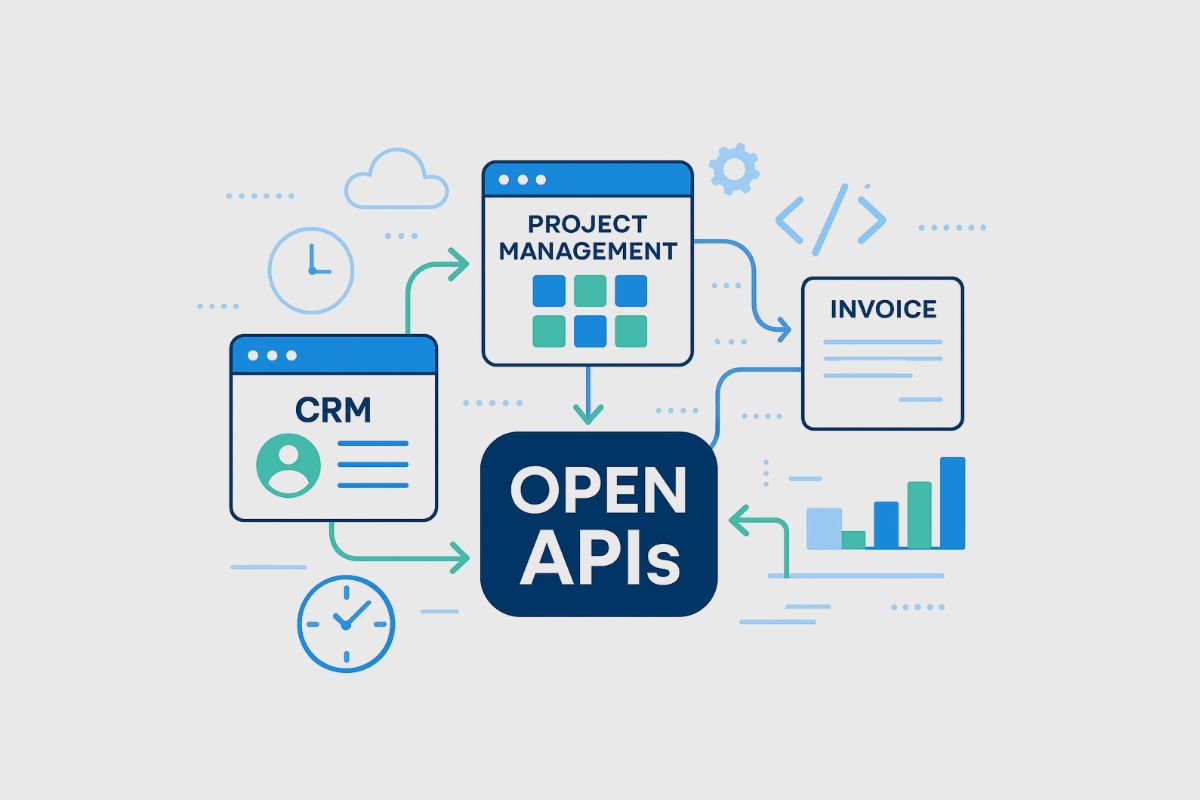
Our platform was designed from the ground up to integrate—not compete—with your agency’s tech stack. With open APIs, pre-built connectors, and real-time sync, we help agencies:

  • Eliminate manual reentry
  • Create end-to-end visibility
  • Scale faster with less operational overhead
  • Give finance and ops the tools to lead—not lag

Call to Action:

Is your tech stack working together—or just working in parallel?