Categories
Blog

Forecast Showers: Nurturing Creative Growth with Data

Data is the driving force behind creative innovation and financial sustainability. Agencies that harness data-driven insights and financial forecasting can elevate their decision-making, optimize resources, and unlock new growth opportunities. Imagine having a clear roadmap that guides creative and financial strategies, eliminating guesswork and empowering teams to work smarter.

Understanding profitability at the client level ensures agencies invest their time and energy where it matters most. It’s like fine-tuning an engine—precision leads to better performance, stronger client relationships, and increased profitability. With the right tools, agencies can seamlessly integrate financial forecasting into their workflows, transforming uncertainty into strategic advantage. Let’s explore how Accountability equips agencies with the data they need to thrive.

How Accountability Provides Growth-Driving Data

Financial forecasting is a game-changer for agencies striving to maintain stability while pushing creative boundaries. By leveraging real-time data, agencies can fine-tune their operations, ensuring that resources are allocated effectively and profitability remains a priority. Each element of financial forecasting—from campaign performance metrics to future resource planning—plays a critical role in shaping an agency’s success.

Let’s examine how Accountability provides the tools necessary to integrate financial forecasting into daily workflows, allowing agencies to make data-driven decisions with confidence.

Real-Time Campaign Performance Metrics

Agencies live and breathe creativity, but success ultimately hinges on measurable impact. Real-time campaign performance metrics provide the clarity needed to fine-tune creative strategies, ensuring marketing efforts remain agile and effective.

Without real-time insights, agencies risk misallocating budgets and missing crucial engagement opportunities. Whether an ad campaign underperforms or exceeds expectations, immediate access to performance data allows for rapid adjustments. Agencies can shift resources, tweak messaging, or refine targeting strategies to maximize impact. The ability to act quickly ensures that creative work isn’t just inspired—it’s also backed by solid data that guarantees results.

Beyond adjustments, real-time data also strengthens client relationships. When agencies can present performance insights instantly, they build credibility and trust, positioning themselves as strategic partners rather than just service providers. With Accountability, financial forecasting and campaign analytics come together to form a comprehensive picture of agency success.

Client-Level Profitability Reports

Not all clients contribute equally to the bottom line. Some bring in consistent revenue, while others demand high effort with low returns. Understanding client-level profitability allows agencies to make informed decisions about where to focus their energy.

Profitability reports provide a granular view of revenue generation, operational costs, and overall financial impact. Agencies can pinpoint which clients are most profitable and which may require renegotiation or strategic adjustments. With this knowledge, agencies can prioritize high-value clients, optimize pricing models, and ensure sustainable financial growth.

For example, if a report reveals that a particular client generates strong profit margins but requires additional support, an agency can tailor its approach to nurture long-term collaboration. Conversely, if a client consistently demands resources without delivering proportional revenue, agencies can reassess their engagement terms. Data-driven decisions like these help agencies maintain financial stability while delivering high-quality creative work.

Automated Expense Tracking for Creative Jobs

Budget overruns can derail even the most well-planned projects. Manual expense tracking is prone to errors and inefficiencies, making it difficult to maintain financial oversight. Accountability automates expense tracking, ensuring that every dollar is accounted for and allocated effectively.

When agencies automate financial processes, they eliminate the risk of human error while freeing up valuable time for creative work. Expense tracking tools within Accountability provide real-time cost monitoring, allowing teams to stay within budget and make proactive financial decisions. Whether managing vendor invoices, production costs, or overhead expenses, automation ensures accuracy and efficiency.

A clear financial picture also enhances forecasting capabilities. Agencies can analyze past expenditures to predict future budgeting needs, ensuring that financial planning aligns with creative ambitions. By integrating automated expense tracking, agencies can strike the perfect balance between creativity and cost control.

ROI Analysis for Campaign Optimization

Every campaign represents an investment—of time, resources, and creativity. Understanding return on investment (ROI) is crucial for refining marketing strategies and ensuring that every dollar spent generates meaningful results.

ROI analysis helps agencies assess campaign effectiveness, identifying what works and what needs improvement. By evaluating past performance, agencies can optimize future campaigns to maximize impact. Whether analyzing conversion rates, engagement metrics, or cost-per-acquisition figures, data-driven insights provide a roadmap for continuous improvement.

Agencies that leverage ROI analysis can also justify their strategic recommendations to clients. Instead of relying on intuition, teams can present hard data that supports their decisions, strengthening client confidence and fostering long-term partnerships. With Accountability’s financial forecasting capabilities, agencies can refine their approach to deliver stronger, more profitable results.

Forecasting Future Resource Needs

Anticipating future needs is the key to staying ahead in a dynamic industry. Agencies must plan for workload fluctuations, talent requirements, and market shifts to remain competitive. Financial forecasting enables proactive decision-making, ensuring that agencies are prepared for both challenges and opportunities.

With predictive analytics, agencies can assess upcoming project demands and allocate resources accordingly. Whether hiring additional talent, adjusting budgets, or expanding service offerings, accurate forecasting provides the confidence needed to scale operations effectively.

For example, if data suggests an increase in demand for video content, agencies can invest in video production resources ahead of time, ensuring they’re well-positioned to meet client needs. Similarly, if financial forecasting predicts seasonal revenue fluctuations, agencies can adjust spending strategies to maintain stability.

By incorporating forecasting into their workflow, agencies gain a strategic advantage. Instead of reacting to market changes, they can anticipate them—making calculated decisions that drive long-term success.

Embracing Data for Lasting Success

Creative excellence and financial success aren’t mutually exclusive. Agencies that embrace data-driven insights can achieve both, optimizing their operations while delivering innovative work. By integrating real-time metrics, profitability reports, automated expense tracking, ROI analysis, and forecasting tools, agencies can refine their approach and ensure sustainable growth.

Now is the time to evaluate your agency’s financial strategies. Are your resources being allocated effectively? Is your profitability data guiding your decision-making? The right insights can transform your agency’s trajectory, turning challenges into opportunities and uncertainty into clarity.

Discover how Accountability can empower your agency with smarter financial forecasting and real-time data solutions. Request a free demo today and take the first step toward a more profitable, data-driven future.


Categories
Blog

Effortless Budget Management for Creative Projects

Managing budgets while fostering creativity can feel like walking a tightrope. On one side, financial discipline is non-negotiable, and on the other, the boundless potential of innovative ideas demands flexibility. Striking the perfect balance isn't just a goal—it’s a necessity for long-term success. With the right financial management strategies, agencies can transform budget constraints into opportunities that fuel creativity rather than hinder it.

This is where Accountability redefines financial management. Imagine real-time budget tracking that empowers teams to make informed decisions on the fly, automated alerts that prevent overruns before they happen, and predictive forecasting that ensures resources are allocated with precision. With these capabilities, budget management becomes less about restriction and more about strategic empowerment, allowing agencies to focus on what they do best—delivering groundbreaking creative work.

Streamlining Budget Management with Accountability

Managing budgets effectively is key to ensuring creative projects run smoothly without financial surprises. Accountability provides a structured approach to financial management, equipping agencies with the tools to monitor spending, anticipate challenges, and maximize resources.

Real-Time Budget Tracking

Financial visibility is the cornerstone of effective budget management. With Accountability, agencies gain instant access to their budget status, ensuring financial decisions are backed by real-time data.

A clear, up-to-the-minute understanding of expenditures enables teams to respond proactively to budget fluctuations. If spending trends move upward unexpectedly, adjustments can be made in real time—whether by reallocating funds, negotiating vendor costs, or fine-tuning project scope. With a system designed to track expenses as they happen, agencies can maintain financial control without micromanaging every dollar.

Proactive Alerts for Budget Overruns

One of the biggest challenges agencies face is detecting budget overruns before they spiral out of control. Accountability’s automated alert system acts as an early warning mechanism, flagging potential overspending before it impacts profitability.

These real-time notifications encourage accountability at every level, prompting teams to reassess expenditures and make strategic adjustments when necessary. Instead of discovering budget issues after the fact, agencies can take preemptive action, ensuring financial stability while maintaining the creative integrity of their projects.

Forecasting for Strategic Resource Allocation

A well-executed financial strategy isn’t just about managing current budgets—it’s about planning for the future. Accountability enables agencies to forecast financial needs based on historical data and current project trajectories, allowing for informed decision-making that supports long-term growth.

Predictive forecasting tools help agencies anticipate when additional resources—whether talent, tools, or technology—will be required. With this level of insight, teams can plan ahead, ensuring that critical project components receive the necessary financial support. This not only improves efficiency but also prevents last-minute budget crunches that can stifle creativity and delay timelines.

Expense Categorization for Financial Clarity

Not all creative projects require the same level of investment. Understanding where money is being allocated is key to optimizing financial resources. Accountability allows agencies to categorize expenses by project type, department, or specific creative tasks, giving them a detailed breakdown of cost distribution.

This granular level of financial insight helps teams identify cost drivers and optimize spending. If a particular aspect of production consistently exceeds budget expectations, agencies can explore cost-saving measures without sacrificing quality. By making financial data transparent and accessible, agencies can refine their spending habits and ensure resources are used effectively.

Automated Reporting for Informed Decision-Making

Staying on top of financial performance requires more than just tracking numbers—it demands a deep understanding of budget trends and financial health. Accountability’s automated reporting system streamlines financial reviews, generating detailed reports with minimal manual effort.

These reports provide a clear snapshot of spending patterns, profitability, and budget adherence, enabling agencies to make data-driven decisions. By automating financial reporting, teams can shift their focus from tedious number-crunching to strategic planning, ensuring that every financial move supports the agency’s broader goals.

Embracing Financial Management as a Creative Catalyst

Budgeting doesn’t have to be a restrictive force—it can be a catalyst for smarter, more strategic creativity. With the right financial management tools in place, agencies can operate with confidence, knowing that every dollar is accounted for and optimally allocated.

By embracing real-time budget tracking, proactive alerts, predictive forecasting, and detailed expense categorization, agencies gain the ability to navigate financial complexities with ease. More importantly, these strategies create a financial foundation that supports innovation rather than stifles it.

Now is the time to take control of your agency’s financial future. Discover how Accountability can revolutionize your budget management strategy and empower your team to create without limits. Request a free demo today and unlock the full potential of your agency.

Categories
Blog

Ditch the Generic: Streamline Your Workflow with Integrated Tools

Disconnected systems are like puzzle pieces scattered across the floor—no matter how hard you try, they just won’t fit together. This fragmentation hampers productivity, stifles collaboration, and ultimately hinders growth. Teams struggle to access essential information, leading to delayed decisions and lost opportunities. But it doesn’t have to be this way. Integrated workflows eliminate these inefficiencies, transforming isolated operations into cohesive units.

With streamlined processes, businesses can unlock their full potential. This is where Accountability comes in, redefining the way agencies manage financial operations and integrate with existing tools. Through real-time data sharing, seamless financial tracking, and automated approval workflows, Accountability offers a smarter approach to agency software.

How Accountability Helps with Integrated Workflows

A truly integrated workflow ensures that teams, tools, and processes work together harmoniously, eliminating redundancies and inefficiencies. By bridging gaps between different operational functions, Accountability empowers businesses to optimize performance, maintain financial clarity, and improve collaboration without disrupting existing structures. Let’s explore the key ways Accountability facilitates these integrated workflows.

Seamless Media Finance Integration

Financial management should never be a roadblock to creativity. Yet, when financial processes are fragmented, budgeting and expense tracking becomes a constant struggle. Accountability simplifies media finance integration, ensuring that agencies can efficiently track costs and optimize resources without unnecessary manual work.

Without integrated workflows, financial data often exists in separate spreadsheets and disconnected platforms, making reconciliation a time-consuming and error-prone task. By consolidating financial data across multiple projects, teams gain complete visibility into expenditures. This transparency allows for better forecasting and resource allocation, helping teams avoid financial bottlenecks that could delay project timelines. With automated tracking and reporting, budget discrepancies are minimized, ensuring that financial operations run smoothly.

With all financial information housed in one system, agencies no longer need to rely on spreadsheets or disconnected tools. The result? Greater accuracy, faster reconciliations, and more time spent on high-value creative work instead of number-crunching.

Project Management Compatibility

The ability to manage projects efficiently is essential for agencies juggling multiple clients and deadlines. However, project management tools are often isolated from financial systems, leading to disjointed workflows. Accountability solves this problem by integrating seamlessly with popular project management software, ensuring that financial and operational data are always in sync.

Siloed project management tools can make it difficult to track project budgets and resource utilization in real time. This disconnect can lead to overspending, inefficient resource allocation, and a lack of visibility into financial performance. This compatibility ensures that project progress and financial tracking go hand in hand. When agencies integrate their project management software with Accountability, they gain real-time insights into project-related expenses and can make informed decisions without toggling between multiple systems. Whether it’s tracking vendor costs, monitoring resource allocation, or analyzing project profitability, integrated workflows create a seamless bridge between creative execution and financial oversight.

Real-Time Data Sharing Across Departments

A business is only as strong as its ability to communicate effectively. When data is siloed within different departments, it creates blind spots that lead to inefficiencies, misaligned strategies, and missed opportunities. Accountability eliminates these barriers by facilitating real-time data sharing across teams, ensuring that every department has access to accurate and up-to-date insights.

In traditional workflows, teams often rely on outdated reports or inconsistent data to make decisions, leading to costly mistakes. Instead of waiting for end-of-month reports, teams can pull real-time data whenever they need it. This allows for agile decision-making, ensuring that strategies are adjusted proactively rather than reactively. Whether it’s monitoring budget utilization, tracking campaign performance, or optimizing vendor agreements, real-time access to financial insights empowers teams to work smarter.

With a unified data-sharing system in place, businesses can eliminate redundancies, improve collaboration, and ensure that everyone—from finance to operations—is working with the same reliable information.

Automated Approval Processes

Managing approvals across different teams and departments can be a logistical challenge, particularly when relying on manual workflows. Delayed sign-offs, lost documents, and unclear accountability can bring projects to a halt. Accountability streamlines this process with automated approval workflows that ensure efficiency without sacrificing oversight.

The traditional approval process often involves long email chains, misplaced documents, and unclear responsibilities, slowing down productivity. With customizable approval hierarchies, agencies can ensure that the right stakeholders sign off on expenses while keeping workflows efficient. Notifications keep teams informed at every step, reducing the risk of missed approvals or last-minute budget surprises. By automating these processes, agencies eliminate unnecessary delays, ensuring that financial operations align seamlessly with project timelines.

Automation also reduces human error, increasing the accuracy of financial data and allowing teams to focus on more strategic tasks instead of chasing down approvals. This results in faster turnaround times, smoother collaboration, and a more organized approach to financial management.

Unified Reporting for Quick Decision-Making

Every decision a business makes should be backed by data, but scattered reporting systems can make it difficult to extract meaningful insights. Without a unified system, compiling reports can be time-consuming and prone to errors. Accountability resolves this issue with integrated reporting tools that consolidate data from multiple sources, delivering a clear and accurate view of financial performance.

When reports are generated manually from disconnected systems, errors and inconsistencies can occur, leading to flawed decision-making. Through integrated worfklows, stakeholders can access real-time financial reports, analyze performance metrics, and identify trends without spending hours compiling spreadsheets. Whether evaluating project profitability, tracking budget adherence, or forecasting future financial needs, Accountability’s reporting capabilities provide the clarity agencies need to make informed decisions quickly.

By offering a single source of truth, Accountability empowers teams to generate reports effortlessly, identify inefficiencies, and adjust strategies in real time. With a data-driven approach, businesses can improve financial forecasting and optimize operations for long-term success.

Enhance Efficiency and Profitability with Integrated Workflows

Disconnected systems create friction, slow down decision-making, and ultimately hinder growth. Integrated workflows offer a solution, allowing agencies to streamline financial management while maintaining creative agility. With Accountability, agencies can break free from outdated systems, unify financial processes, and make data-driven decisions with confidence.

A scattered approach to agency software results in wasted time, redundant tasks, and missed opportunities. Now is the time to evaluate your current systems. Are they enhancing collaboration, or creating roadblocks? If inefficiencies are holding your team back, consider how integration could transform your operations. The right agency software should empower teams—not slow them down.

Seamless integration is the key to future success. Request a free demo today and take the first step toward a more streamlined, efficient future.

Categories
Blog

5 Ways Accountability Maximizes Agency ROI

In today’s fast-paced market, maximizing ROI isn’t just a goal but a survival strategy. Agencies are grappling with tighter margins and fiercer competition, forcing them to rethink how they operate. The stakes are high, and every decision counts—especially when it comes to managing resources and finances effectively. This is where structured accountability steps into the spotlight. By implementing systems designed to enhance transparency and track performance, agencies can turn their operations into well-oiled machines. Accountability is a game-changing agency software that offers a roadmap to survive and thrive.

With the right framework in place, agencies can transform their profitability from a distant aspiration into a tangible reality. The key is leveraging the right technology to drive efficiency, accuracy, and financial visibility.

Driving Profitability Through Agency Software

A well-structured operational framework ensures that agencies can track, measure, and optimize their financial performance with precision. Accountability provides a centralized system that empowers agencies to streamline their workflows, eliminate inefficiencies, and maximize profitability. As an industry-leading agency software, it offers key features designed to enhance financial management and operational control. Here’s how Accountability helps drive profitability:

1) Automating Financial Processes

One of the most significant advantages of implementing Accountability agency software is the automation of financial processes, particularly billing and invoicing. Traditional billing methods often lead to errors, delayed payments, and inefficiencies that hinder cash flow. By automating these processes, agencies can:

  • Reduce Manual Effort: Automation eliminates repetitive tasks, allowing teams to focus on strategic activities.
  • Ensure Accuracy: Automated invoicing minimizes human error, reducing disputes and ensuring timely payments.
  • Accelerate Cash Flow: With faster billing cycles, agencies can maintain financial stability and reinvest in growth.

Consider an agency that previously took two weeks to process invoices. With automated billing through agency software, that timeline is reduced to just a few days, significantly improving their cash flow and financial health.

2) Optimizing Resource Utilization

Effective resource management is crucial for maximizing profitability. Accountability agency software provides advanced tools to track employee performance, manage workloads, and ensure optimal allocation of resources.

  • Time Tracking: Accurate tracking ensures that all billable hours are captured and invoiced correctly.
  • Performance Analytics: Real-time data enables agencies to assess employee efficiency and adjust workloads accordingly.
  • Integrated AI and Project Management Tools: While Accountability does not offer project management capabilities, it seamlessly integrates with third-party tools to enhance project execution and time allocation.

For example, an agency that monitors time-tracking data can identify inefficiencies in project execution, allowing them to restructure workflows and boost overall productivity.

3) Controlling Overhead Costs

Operational costs can quickly spiral out of control without a structured approach to financial management. Custom ERP modifications often lead to increased expenses, but Accountability agency software offers a streamlined solution that reduces the need for excessive customizations.

  • Lower Implementation Costs: Agencies save on expensive development fees associated with custom ERP systems.
  • Simplified Training: An intuitive interface reduces onboarding time and training expenses.
  • Scalability: As agencies grow, they can seamlessly expand their operations without unnecessary system modifications.

By reducing overhead costs, agencies can allocate more resources to revenue-generating activities, ensuring long-term sustainability and growth.

4) Real-Time Financial Visibility

In an industry where margins can be razor-thin, having access to real-time financial data is a game-changer. Accountability agency software provides agencies with powerful financial insights that allow for proactive decision-making.

  • Dynamic Dashboards: A comprehensive view of revenue, expenses, and profit margins enables agencies to monitor financial health at a glance.
  • Forecasting Tools: Agencies can leverage predictive analytics to anticipate cash flow fluctuations and adjust budgets accordingly.
  • Instant Adjustments: Real-time access to financial data allows agencies to pivot quickly and optimize profitability.

For instance, an agency that reviews its financial dashboard daily can detect a decline in profitability and take corrective actions before it impacts long-term performance.

5) Enhancing Workflow Integration

Accountability fosters seamless collaboration by integrating financial data across teams. This holistic approach ensures that all departments operate in sync, eliminating data silos and enhancing efficiency.

  • Centralized Data Access: Teams have real-time access to financial information, reducing miscommunication.
  • Standardized Processes: A unified system ensures consistency in financial reporting and workflow execution.
  • Seamless Integration with Third-Party Tools: Agencies can connect Accountability with existing AI-powered analytics or project management platforms for enhanced functionality.

For example, an agency that synchronizes its financial data with its CRM system can gain deeper insights into client profitability, allowing for more informed business decisions.

Unlock Your Agency's Full Potential with Accountability

Maximizing ROI requires more than just hard work—it demands the right systems, processes, and technology. By implementing Accountability, agencies can automate financial operations, optimize resources, control costs, and gain real-time financial visibility, all while fostering a more integrated and efficient workflow. As an advanced agency software, it provides the tools agencies need to refine operations and drive profitability.

Now is the time to take action. Implement an accountability-driven approach that enhances transparency, improves financial health, and drives long-term profitability. Ready to see the difference? Request a free demo today and unlock the full potential of your agency.

Categories
Blog

Financial Insights for Creative Excellence

Imagine embarking on a creative journey without a map—thrilling, but ultimately directionless. Without financial data, that’s exactly what happens. In an industry where innovation drives success, financial insights act as the compass that transforms creative vision into measurable impact. By integrating financial management into creative processes, teams can ensure that every campaign, pitch, and project is backed by data-driven strategy.

Financial data isn’t just a collection of numbers; it tells the story of success, efficiency, and growth. With real-time insights and forecasting tools, creative professionals gain the power to optimize their efforts in ways that fuel profitability and long-term sustainability. The intersection of financial intelligence and creativity is where true innovation happens. Welcome to a new era of strategic excellence.

How Accountability Provides Strategic Insights

Successful creative execution requires more than just talent and vision—it demands a solid financial foundation. By leveraging strategic insights, teams can align their creative efforts with financial realities, ensuring sustainability and profitability. Access to real-time data, profitability reports, and forecasting tools empowers decision-makers to make informed choices that maximize impact. With the right financial management strategies in place, creativity thrives within a framework of efficiency and accountability.

Here’s how Accountability helps provide strategic insights:

KPI Dashboards for Campaign Performance

Key Performance Indicators (KPIs) serve as vital benchmarks for evaluating creative success. Metrics such as engagement rates, conversion rates, and return on investment (ROI) reveal which campaigns resonate and which need refinement. Without a structured approach to tracking these numbers, teams risk making decisions based on intuition rather than concrete evidence.

Financial management

Access to real-time KPI dashboards enables creative teams to analyze campaign effectiveness and make adjustments on the fly. A campaign showing lower-than-expected engagement, for example, can be optimized by refining messaging, adjusting targeting parameters, or reallocating budget to higher-performing channels. With a consolidated view of performance data, teams can pivot swiftly, ensuring that creative efforts translate into tangible business outcomes.

Client-Level Profitability Reports

A clear understanding of client profitability is crucial for sustainable growth. Profitability reports provide insights into project costs, revenue streams, and overall margins, helping teams identify high-value clients and optimize resource allocation.

Analyzing these reports allows creative teams to refine their approach to project selection. If a client consistently yields strong profit margins, prioritizing that partnership can lead to greater financial stability. Conversely, if certain projects drain resources without delivering proportional returns, strategic adjustments can be made to improve efficiency. This data-driven decision-making ensures that creativity is not only inspiring but also financially viable.

Forecasting Tools for Future Campaigns

Anticipating market trends and consumer behavior is a cornerstone of effective creative strategy. Forecasting tools leverage historical data and predictive analytics to help teams stay ahead of industry shifts, ensuring that campaigns align with emerging demands.

For instance, if data trends indicate a growing interest in sustainability, creative teams can craft campaigns that highlight eco-conscious initiatives, aligning messaging with audience expectations before the trend peaks. By leveraging these insights, teams can proactively shape their strategies, maximizing impact and engagement. Forecasting not only informs creative direction but also ensures that budgets are allocated to initiatives with the highest potential return.

Real-Time Reporting for Quick Adjustments

In an environment where audience preferences evolve rapidly, the ability to react in real time is a game-changer. Immediate access to financial data allows creative teams to identify shifts in campaign performance and make timely optimizations.

Real-time reporting tools provide insights into budget utilization, ad spend efficiency, and overall financial impact. If a campaign suddenly experiences a surge in engagement, teams can allocate additional resources to capitalize on momentum. Alternatively, if certain initiatives underperform, budgets can be reallocated to higher-yielding efforts. This agility ensures that creative investments generate the best possible return.

Financial management

Visualized Data for Creative Leaders

Data visualization plays a critical role in bridging the gap between financial insights and creative execution. When complex financial reports are translated into intuitive visuals, decision-makers can quickly grasp key trends and take informed action.

Dashboards featuring charts, graphs, and infographics make financial data more accessible, helping creative teams align their objectives with broader business goals. When leaders can see the direct correlation between creative efforts and financial outcomes, strategic alignment becomes second nature. This fosters a culture where financial intelligence and creative ingenuity work in harmony, driving sustained growth.

Intelligent Financial Management: The Key to Creative Success

Financial management is not a constraint on creativity—it’s a catalyst for success. When teams embrace financial insights as a strategic tool, they gain the ability to refine their campaigns, optimize resources, and drive measurable impact. KPI dashboards, profitability reports, and forecasting tools empower creative professionals to make informed decisions that lead to sustained growth and innovation.

The future of creative excellence lies in the integration of financial intelligence. By leveraging real-time reporting and data visualization, teams can turn insights into action, ensuring that every creative endeavor is not only inspired but also strategically sound. Take control of your financial strategy today and unlock the full potential of your creative vision.

Request a free demo to see how Accountability can help you transform financial insights into creative success.

Categories
Blog

Ditch the Generic: Why Agencies Need Financial Transparency

Financial transparency is the foundation of sustainable business growth, turning raw numbers into actionable insights. When agencies have clear visibility into their financial health, they can make strategic decisions with confidence, optimize resource allocation, and build trust with stakeholders. Without this clarity, inefficiencies, unnecessary risks, and lost opportunities can erode profitability and hinder long-term success.

Operating without financial transparency is like navigating a complex landscape without a map. Without clear financial visibility, agencies risk making decisions based on assumptions rather than data. By embracing financial transparency, agencies can align their strategies with real-time insights, proactively addressing challenges and seizing new opportunities. The right financial management tools simplify these processes and empower teams to make informed, data-driven choices that enhance stability and growth.

How Accountability Delivers Financial Transparency

Financial transparency isn’t just about tracking numbers—it’s about creating a system where financial data is accessible, accurate, and actionable. Without clear financial insights, agencies may struggle with inefficient resource allocation, unexpected cash flow issues, and missed growth opportunities. By leveraging technology-driven solutions, agencies can gain real-time visibility into their financial health, ensuring smarter decision-making and long-term sustainability.

The right tools streamline financial processes and empower teams to work more efficiently and strategically. Here’s how a robust financial management system like Accountability enhances transparency across key financial areas:

Real-Time Financial Dashboards

In today’s fast-paced environment, real-time financial dashboards provide a vital lens into an agency’s financial health. These dashboards offer an intuitive, visual representation of key financial metrics, allowing decision-makers to assess revenue, expenses, and profitability at a glance.

With real-time insights, agencies can detect emerging trends and adjust their strategies accordingly. For example, if revenue dips unexpectedly, financial teams can identify the root cause—whether it’s project delays, client churn, or unexpected costs—and implement corrective measures immediately. This level of agility ensures that businesses remain proactive rather than reactive, improving financial stability and resilience.

Job-Level Profitability Reports

Profitability can vary significantly across different clients and projects, making it essential to track financial performance at a granular level. Job-level profitability reports break down earnings and expenses associated with each project, helping agencies pinpoint the most lucrative opportunities and identify areas for improvement.

By leveraging these insights, agencies can allocate resources more effectively. If a specific project consistently yields high profit margins, leadership may decide to prioritize similar opportunities. Conversely, low-margin projects may require renegotiation of contracts or adjustments to pricing structures. This level of analysis helps agencies maintain financial efficiency while delivering high-value services.

Accurate Forecasting Tools

Strategic planning depends on accurate financial forecasting. By analyzing historical data and market trends, agencies can create more precise revenue and expense projections, setting realistic growth targets that align with financial realities.

Effective forecasting is particularly beneficial for cash flow management. Anticipating potential revenue fluctuations allows agencies to plan for lean periods, ensuring financial stability even during market downturns. For instance, if forecasts indicate a seasonal dip in client activity, agencies can adjust spending plans, explore new revenue streams, or optimize their service offerings to counteract the slowdown. This proactive approach strengthens resilience and long-term financial health.

Comprehensive Expense Tracking

A deep understanding of expenditures is crucial for optimizing profitability. Expense tracking enables agencies to identify spending patterns, control costs, and eliminate inefficiencies that drain resources.

By categorizing and analyzing expenses, finance teams can detect overspending trends. If travel costs, software subscriptions, or operational expenses are consistently exceeding budgets, adjustments can be made to optimize spending without compromising productivity. Robust expense tracking fosters financial discipline and ensures that every dollar contributes to overall business objectives.

Clear Role-Based Data Access

Financial transparency doesn’t mean unrestricted access to sensitive data—it means ensuring that the right people have the right insights at the right time. Role-based data access allows teams to see the financial information that is relevant to their responsibilities while maintaining security and confidentiality.

For instance, project managers benefit from job-level profitability reports, while finance teams require comprehensive expense-tracking tools. This structured approach empowers employees with the insights they need to make informed decisions while safeguarding sensitive financial data. By fostering accountability at all levels, agencies can cultivate a culture of financial responsibility and strategic execution.

Embracing Financial Clarity for Sustainable Growth

Financial transparency is more than just a best practice—it’s a strategic advantage. Agencies that prioritize real-time financial dashboards, profitability reports, accurate forecasting, and meticulous expense tracking position themselves for long-term success. These tools provide the clarity needed to optimize operations, improve decision-making, and foster sustainable growth.

By integrating role-based data access and leveraging advanced financial management solutions, agencies can enhance financial oversight, reduce risks, and strengthen their competitive edge. Now is the time to take control of financial complexity and transform transparency into a driving force for growth.

Request a free demo to see how Accountability can help your agency achieve financial clarity and efficiency.

Categories
Blog

How Accountability Simplifies Multinational Operations

In today’s interconnected world, managing finances isn't just a matter of balancing the books—it’s an intricate dance of currencies, regulations, and market dynamics. Agencies operating across multiple countries must juggle compliance requirements while maintaining profitability in highly dynamic environments. With financial missteps potentially leading to severe consequences, the need for effective, adaptive agency efficiency software solutions has never been more pressing.

Managing international financial operations requires precision, adaptability, and the right technology. Accountability is designed to simplify these complexities, providing agencies with a powerful agency efficiency software to tackle challenges such as multi-currency transactions, local tax regulations, and centralized data analysis. By leveraging our technology, businesses can turn financial operations from a chaotic juggling act into a well-orchestrated performance, enabling them to seize opportunities and drive growth on the global stage.

Key Features for Global Agencies

Effectively managing financial operations across multiple countries requires more than just keeping track of numbers—it demands a strategic approach to handling currency fluctuations, taxation, and data consolidation. Agencies must navigate a web of regulations while ensuring financial accuracy and efficiency. Without the right tools, these challenges can become overwhelming, leading to costly errors and inefficiencies.

Accountability provides a streamlined solution designed to simplify financial complexities on a global scale. As a robust agency efficiency software, it integrates essential financial tools into one cohesive system. By unifying financial data, automating compliance processes, and optimizing reporting workflows, our platform empowers agencies to maintain control and efficiency across international markets.

Multi-Currency Support

Operating in multiple countries means dealing with numerous currencies, each fluctuating with market conditions. Without an efficient system in place, managing multi-currency transactions can be time-consuming and prone to costly errors.

Seamless multi-currency support within Accountability allows agencies to handle financial operations with precision and efficiency. Real-time exchange rate integration ensures that financial reporting and invoicing remain accurate, mitigating the risks associated with currency fluctuations. Automated currency conversion further reduces manual intervention, saving time and minimizing the potential for errors. This flexibility allows businesses to maintain competitive pricing strategies while ensuring financial stability across regions.

Local Tax Configurations

Every country has its own set of tax laws and compliance requirements, making taxation one of the most complex aspects of multinational financial management. Staying up to date with tax regulations is critical to avoiding penalties and ensuring smooth operations.

Accountability simplifies this process by offering dynamic local tax configurations tailored to specific markets. Our agency efficiency software automatically adjusts to tax law changes, ensuring compliance without requiring constant manual intervention. With built-in local tax settings, businesses can generate tax reports that meet regulatory requirements, reducing administrative burdens and allowing finance teams to focus on strategic financial planning rather than compliance headaches.

Centralized Financial Data

Data fragmentation is one of the biggest hurdles agencies face when managing multinational operations. When financial data is stored in disparate systems across various offices, gaining a comprehensive view of performance becomes challenging.

Accountability eliminates this obstacle by centralizing financial data into a single, accessible platform. Decision-makers can access real-time insights from multiple locations, allowing for more informed financial strategies. With all critical financial information available in one place, agencies can assess profitability, identify trends, and make proactive adjustments to improve efficiency and drive growth.

Consolidated Reporting

For agencies with a global presence, financial reporting must be both detailed and comprehensive. Manually compiling financial reports from various locations is not only time-consuming but also increases the risk of inconsistencies and errors.

Accountability streamlines this process through automated consolidated reporting. By integrating financial data from multiple offices into a single, unified report, businesses can gain a clear and accurate picture of overall performance. This enables leadership teams to make data-driven decisions, allocate resources effectively, and identify areas for cost optimization. The ability to generate real-time, error-free reports also enhances transparency and simplifies auditing processes.

Seamless Inter-Office Billing

Managing financial transactions between different regional offices can quickly become a logistical challenge. Without a standardized system, internal billing inefficiencies can create confusion, delays, and misallocated expenses.

With Accountability, inter-office billing becomes a seamless process. Transactions between offices are tracked with accuracy, ensuring clear financial accountability across all regions. By automating these processes, businesses can eliminate disputes, improve cash flow management, and enhance overall collaboration between departments. This not only strengthens financial clarity but also enables agencies to operate as a cohesive, globally connected entity.

Navigating the Financial Frontier

Successfully managing multinational financial operations requires more than just staying afloat in a sea of regulations—it demands a proactive approach to efficiency and compliance. Accountability provides agencies with the necessary tools to conquer global financial challenges by integrating multi-currency support, automated tax compliance, centralized data management, consolidated reporting, and inter-office billing into a single, intuitive platform.

As an advanced agency efficiency software, Accountability enables agencies to optimize financial workflows, minimize risks, and enhance decision-making in an increasingly complex global economy. The key to thriving in an international marketplace lies in adaptability and innovation. By leveraging the right financial management solutions, businesses can unlock new growth opportunities and maintain a competitive edge.

It’s time to take control of financial complexity and transform challenges into strategic advantages. Request a free demo to see how Accountability can elevate your global financial operations.

Categories
Blog

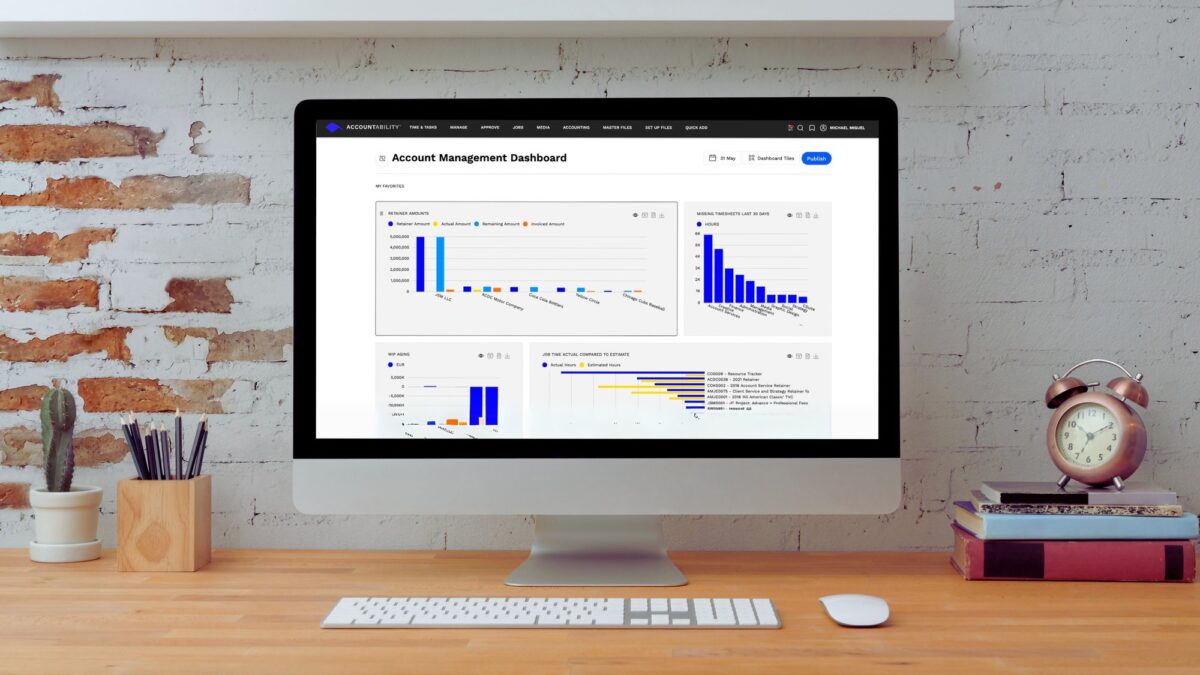
Spring Clean Your Finances: Freshen Up Your Dashboards

Outdated dashboards can be like wearing blinders in a bustling market; they obscure valuable opportunities and hinder strategic decision-making. In an environment where timely data can mean the difference between seizing an opportunity or missing out, relying on stale metrics is simply not an option. The ability to visualize and interpret data effectively is crucial for driving growth and maintaining a competitive edge.

Imagine having a dashboard tailored specifically to your role—one that highlights the insights most relevant to you. This level of customization transforms data from a confusing maze into a clear path forward. With real-time updates and seamless integrations, teams can respond swiftly to changes, ensuring that every decision is informed and impactful. A modern approach to financial management is the key to sustainable growth, and enhanced dashboards play a critical role in this transformation.

How Accountability Enhances Financial Dashboards

A modern financial dashboard should do more than just display numbers. It should empower teams with the insights they need to make informed decisions. Businesses today require tools that adapt to their specific needs, providing real-time visibility into financial performance and operational efficiency. Without this level of adaptability, organizations risk falling behind in a landscape where agility and data-driven strategies are key to success.

By leveraging customizable dashboards, real-time data visualization, and seamless integrations, businesses can ensure that financial insights are always accurate, relevant, and actionable. These enhancements enable teams to anticipate challenges, seize opportunities, and maintain a strong financial foundation in an ever-evolving market.

Customizable Dashboards for Role-Specific Insights

One-size-fits-all dashboards often lead to inefficiency, as they fail to present users with the most relevant data. Customizable dashboards solve this problem by allowing organizations to tailor views according to specific roles, ensuring that each team member has access to insights that align with their responsibilities. A finance officer may prioritize budget adherence and cash flow projections, while an executive might focus on revenue trends and profitability.

Financial management

Customization streamlines workflows by eliminating unnecessary data, reducing information overload, and enhancing engagement. When individuals can easily access the metrics that matter most to them, they are better equipped to make data-driven decisions that directly impact their areas of expertise.

Real-Time Data Visualization for Quick Decisions

The ability to visualize financial data in real time is crucial for staying ahead of the competition. Static reports quickly become outdated, limiting the ability to react to evolving business conditions. Real-time dashboards enable teams to monitor trends as they unfold, allowing for immediate analysis and strategic adjustments.

For instance, a sudden drop in revenue can be detected instantly, prompting swift action to investigate and resolve the issue. A marketing campaign’s performance can be evaluated in real-time, providing insight into engagement metrics and return on investment (ROI). This proactive approach ensures that financial strategies remain agile and responsive to market conditions.

KPI Tracking to Monitor Financial and Operational Performance

Tracking key performance indicators (KPIs) is essential for maintaining financial stability and operational efficiency. A well-structured dashboard consolidates both financial and operational KPIs, offering a holistic view of performance.

Financial KPIs such as revenue growth, profit margins, and cash flow help organizations measure financial health, while operational KPIs like project efficiency and client retention rates provide insights into overall business performance. By linking creative and operational metrics with financial data, teams can better understand the relationship between investment and outcomes, driving smarter decision-making.

Automated Alerts and Notifications for Immediate Action

Financial management requires constant vigilance, and automated alerts ensure that key stakeholders remain informed about significant changes. These notifications can be configured to trigger when predefined thresholds are met, providing an added layer of control and oversight.

Financial management

For example, if operational costs exceed a set limit, an alert can prompt immediate review and corrective action. If revenue targets are falling short, decision-makers can receive notifications to adjust strategies accordingly. This proactive system ensures that financial risks are mitigated before they escalate, helping organizations maintain stability and efficiency.

Integration with Key Business Tools for a Unified View

A financial dashboard is most effective when it is fully integrated with other essential business tools. By connecting financial data with AI-driven analytics and operational platforms, organizations can gain deeper insights into how different aspects of their business interact.

For example, integrating dashboards with CRM systems provides visibility into client relationships and revenue streams, while linking financial data with budgeting software ensures seamless financial planning. This level of connectivity creates a comprehensive financial ecosystem where data flows effortlessly across departments, improving collaboration and strategic alignment.

The Power of Data-Driven Financial Management

A well-structured financial dashboard is not just a reporting tool—it is a strategic asset that drives decision-making and enhances overall business performance. Organizations that leverage real-time data, automated alerts, and seamless integrations are better positioned to make proactive decisions that contribute to growth and profitability.

Rather than relying on outdated reporting methods, it is time to embrace a smarter, more efficient approach to financial management. With advanced dashboards, teams can transform raw data into actionable insights, ensuring that every financial decision is backed by accurate and timely information.

Are your dashboards empowering your organization to thrive? If not, it may be time to explore a solution that provides real-time insights, automation, and seamless integration. Request a free demo to discover how Accountability can elevate your financial management strategies.

Categories
Blog

Simplify WIP Management

Efficient work-in-progress (WIP) management is like having a GPS for your financial operations—guiding you toward smoother paths and away from potential pitfalls. In today’s fast-paced business environment, where every dollar and minute count, keeping a pulse on your WIP can mean the difference between cash flow bliss and budgetary chaos.

With the right tools and strategies, businesses can gain real-time insights into resource allocation and project progress, enabling informed decisions that drive profitability. WIP management becomes a strategic advantage that ensures every project positively contributes to financial health. Let’s explore how Accountability can simplify WIP management and pave the way for success.

Streamlining WIP Management Through Accountability

Successful WIP management starts with a clear understanding of how to monitor and optimize your financial operations. Leveraging the right tools can transform complex processes into manageable workflows, driving better results. Accountability provides an array of solutions to help businesses stay on top of their WIP, making it easier to achieve financial clarity and efficiency.

Real-Time WIP Tracking Across Projects

The foundation of effective WIP management lies in the ability to monitor ongoing projects in real time. Accountability provides this capability, allowing organizations to gain immediate insights into task completion, resource allocation, and budget consumption. Real-time updates ensure that stakeholders can detect potential issues before they escalate. This transparency facilitates better decision-making, helping teams stay agile and responsive.

Moreover, real-time tracking fosters collaboration across departments. When everyone has access to up-to-date information, the entire team becomes more cohesive. Shared visibility not only aligns goals but also cultivates a culture of ownership, as each member understands how their contributions affect the broader financial picture.

Automated WIP Aging Reports for Better Oversight

Staying on top of project timelines and financial health requires actionable insights, which is where automated WIP aging reports come into play. These reports highlight the duration work has remained in progress, identifying areas that need immediate attention. Accountability simplifies this process, offering timely updates that empower businesses to act swiftly.

By providing a snapshot of project health, aging reports help prioritize resources more effectively. Whether reallocating team efforts to meet critical deadlines or addressing bottlenecks to prevent overspending, these insights become invaluable. Over time, organizations can analyze historical data from these reports to refine their operational strategies and improve efficiency across the board.

Cost Allocation for Accurate Profitability Analysis

Understanding profitability starts with knowing exactly where resources are spent. Accountability enables precise cost allocation, breaking down expenses into labor, materials, and overhead for each project. This granular level of detail ensures a more accurate assessment of profitability and equips teams with the information needed to optimize resource use.

Detailed tracking requires strategy. Armed with a clear view of project costs, businesses can craft pricing models that reflect true expenses while safeguarding profit margins. Additionally, these insights create a foundation for performance metrics, which allow organizations to assess execution efficiency and identify areas for improvement.

Role-Based Dashboards for WIP Insights

In the realm of WIP management, role-based dashboards serve as tailored portals into key metrics. Accountability’s customizable dashboards deliver relevant data to stakeholders based on their responsibilities, ensuring that everyone has the tools needed to drive success.

For example, project managers may require detailed task progress reports, while executives might focus on overarching profitability trends. These dashboards provide the necessary granularity or high-level perspective in a visually digestible format. Charts, graphs, and other visual aids simplify complex data, enabling faster comprehension and more informed discussions. Additionally, real-time updates ensure that decisions are based on the most current information, fostering a proactive approach to challenges.

Alerts for Unbilled Work to Improve Cash Flow

One of the most significant challenges in WIP management is ensuring that completed work is billed promptly. Accountability addresses this with automated alerts for unbilled work, helping organizations maintain a steady cash flow. These proactive notifications ensure that no completed tasks fall through the cracks, mitigating delays in invoicing and improving client relationships.

Timely alerts also enhance financial forecasting by providing clarity on pending revenue. With better visibility into unbilled work, businesses can plan more effectively, allocating funds and resources with confidence. This feature prevents financial leakage and creates a system where every effort translates seamlessly into revenue, reinforcing financial stability.

Streamline Your Processes with the Right Agency Software

Efficient Work in Progress (WIP) management is a pathway to clarity and profitability. Real-time tracking, automated reports, and role-based dashboards aren’t merely tools but strategic assets that transform how organizations approach their financial operations. These elements work together to eliminate bottlenecks, enhance transparency, and ensure that no detail is overlooked.

As you integrate these strategies, keep a close eye on your WIP insights. Use cost allocation to refine pricing, leverage alerts for unbilled work to stabilize cash flow, and rely on historical data to optimize future planning. The better your WIP management, the more control you’ll have over your financial outcomes.

Take charge today. Streamline your WIP management and unlock the potential for clearer insights and greater profitability. Request a free demo to discover how Accountability can transform your financial operations.

Categories
Blog

From Creative Ideas to Profitable Campaigns

Ever tried juggling flaming torches while riding a unicycle? That’s what managing creative projects can feel like without the right agency software in place. When ideas sprout like wildflowers, staying profitable demands a steady hand and a clear sense of direction. Without a robust system to manage resources and track performance, even the most brilliant concepts can falter under the weight of inefficiencies and missed opportunities.

Transforming Ideas Into Profitable Outcomes

Agency software acts as the safety net for creative minds, providing a framework that ensures every project not only shines but also generates revenue. By carefully tracking costs and performance, creative teams can focus on what truly matters: innovative thinking and impactful execution. Here’s how Accountability helps transform ideas into profitable outcomes.

Accurate Job Costing for Creative Projects

Accurate job costing is the backbone of any successful creative project. This involves meticulously tracking all expenses associated with a project, from labor to materials, ensuring every dollar spent is accounted for. When teams have a precise understanding of their financial outlay, they can set realistic budgets and craft pricing strategies that reflect the true value of their work.

With agency software like Accountability, the process becomes seamless. Labor costs, including hours spent by each team member on specific tasks, are easily tracked. Material costs, covering all supplies and resources, are consolidated in one place, while overhead expenses—from utilities to rent—are factored into the equation. This level of detail empowers teams to identify areas of overspending and adjust their strategies in real time, fostering a culture of precision and financial clarity.

Profitability Insights for Each Campaign

Understanding the profitability of each campaign is a cornerstone of long-term success. By analyzing the financial performance of individual projects, teams can make informed decisions that drive growth and sustainability. Agency software provides a comprehensive view of revenue versus costs, revealing insights that fuel strategic planning.

Through features like revenue tracking and cost analysis, teams can monitor income streams and identify trends. Performance metrics, such as return on investment (ROI) and profit margins, offer tangible indicators of success. These insights enable teams to pivot their strategies effectively, doubling down on high-performing campaigns while reevaluating less profitable ones. This approach transforms creativity into a financially viable endeavor, ensuring that innovation remains sustainable.

Streamlined Workflow from Ideation to Execution

A streamlined workflow is essential for turning creative ideas into impactful results. Establishing clear processes from ideation to execution enhances collaboration and efficiency. With Accountability’s integration capabilities, teams can seamlessly connect with project management tools, ensuring a cohesive approach to every stage of the creative journey.

By defining roles and responsibilities, teams avoid overlap and confusion, while realistic deadlines keep projects on track. Communication tools integrated through dynamic APIs facilitate smooth interactions, reducing bottlenecks and ensuring a steady flow of work. This optimized workflow allows creative teams to focus their energy on innovation and execution, driving both productivity and results.

WIP Tracking to Ensure Budget Control

Work-in-progress (WIP) tracking is a critical component of effective budget management. By continuously monitoring ongoing projects, teams can ensure they remain within budget and on schedule. This proactive approach identifies potential issues before they escalate, safeguarding both timelines and financial outcomes.

Agency software like Accountability offers real-time tracking capabilities that provide teams with the insights they need to make informed adjustments. Regular check-ins and detailed documentation of changes create a transparent process, fostering accountability and minimizing risks. This level of oversight ensures that creative projects stay on course, maximizing both efficiency and profitability.

Automated Invoicing for Faster Payments

Automated invoicing is a game-changer for creative teams aiming to enhance cash flow. Agency software simplifies this process by streamlining billing practices, reducing administrative burdens, and ensuring timely payments. With customizable invoice templates and scheduled invoicing tied to project milestones, the platform eliminates manual errors and accelerates payment cycles.

Payment tracking tools keep teams informed about outstanding invoices, enabling timely follow-ups and fostering strong client relationships. By automating invoicing, creative teams can focus on their core strengths while maintaining financial stability and professionalism.

The Perfect Balance: Profitability Meets Creativity

In the realm of creative projects, achieving the perfect balance between profitability and creativity is no longer a distant dream. Agency software bridges the gap, offering tools and insights that empower teams to turn innovative ideas into profitable realities. Accurate job costing, profitability analysis, streamlined workflows, WIP tracking, and automated invoicing collectively create a framework that ensures financial success without compromising artistic integrity.

By integrating these strategies into their workflows, creative professionals unlock new levels of efficiency and innovation. The result is a harmonious blend of creativity and profitability, where each project not only inspires but thrives.

Ready to transform your creative projects? Embrace Accountability today and discover how our agency software can maximize your profitability while enhancing your creative processes. Connect with us to learn more about Accountability or to schedule a free demo of the platform.