Categories
Blog

The Agency Stack Is Only as Strong as Its Financial Core

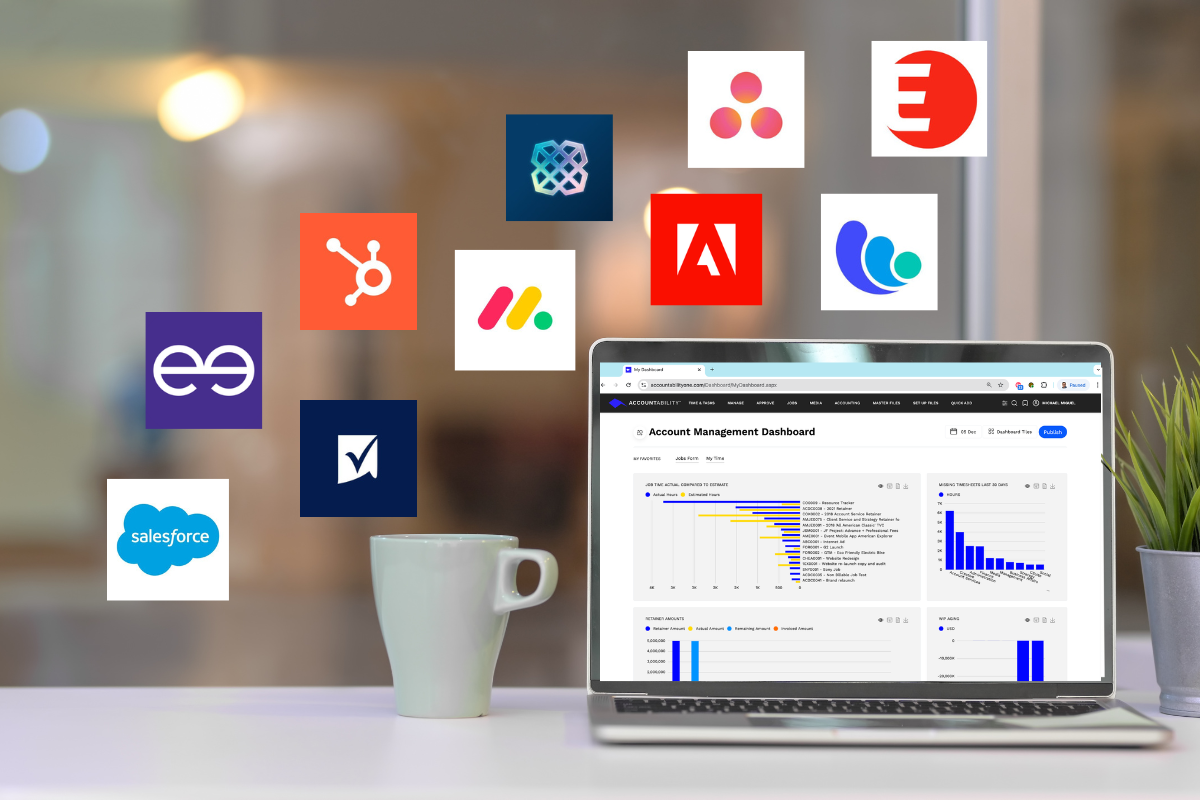
Modern agencies do not run on a single system.

They run on a stack.

  • CRM
  • Project management
  • Media platforms
  • Reporting and analytics tools

The problem is not tool sprawl.It’s that most agency stacks are built on a weak financial core.

Integration Does Not Create Clarity. Structure Does.

Most platforms promise integration.

Data syncs. Dashboards populate. Automations fire.

But integration alone does not create clarity.

If the underlying financial data is not structured around how agencies actually operate, every connected system inherits that confusion.

  • Jobs without real margin context
  • Time without WIP intelligence
  • Revenue without reliable timing

Many agencies still rely on spreadsheets even after investing heavily in modern tools.

Industry analysts, including firms like Gartner, consistently point out that automation and analytics initiatives fail when source systems lack clean, well-defined data models. When the foundation is weak, integration only accelerates inconsistency.

Why Finance Has to Be the Source of Truth

In agencies, finance is not just a reporting function.

  • It is where delivery meets revenue.
  • Where time turns into margin.
  • Where forecasts become commitments.

When financial systems are not job aware, everything else becomes interpretive.

  • CRM forecasts fail to tie back cleanly.
  • Project systems cannot explain profitability.
  • Analytics tools visualize numbers without context.

The stack stays busy, but confidence disappears.

What Changes When the Core Is Built for Agencies

When a financial platform is designed specifically for agency operations, the stack behaves differently.

  • Jobs are consistent across systems.
  • Time, expense, billing, and revenue flow into a single model.
  • Margin is calculated once, not reconciled repeatedly.

Integration starts to compound value instead of complexity.

Agency finance leaders frequently highlight this shift in verified reviews on platforms like Capterra, pointing to improved confidence in reporting and reduced manual intervention once financial data is structured correctly at the source.

Automation Fails Quietly When the Foundation Is Wrong

Automation rarely fails with errors.

It fails with assumptions.

  • If jobs are not clearly defined, automated reporting misleads.
  • If WIP is inaccurate, forecasts drift.
  • If margin logic lives outside the system, analytics become decorative.

This is why agencies often describe automation initiatives as promising but unreliable.

  • The issue is not ambition.
  • It is architecture.

Accounting and professional services publications, including the Journal of Accountancy, regularly emphasize that reliable analytics depend on disciplined financial structure long before dashboards or AI enter the picture.

The Modern Agency Needs a Financial Backbone, Not Another Tool

The strongest agency stacks do not revolve around the loudest tool.

They revolve around the most reliable one. A financial backbone that:

  • Understands agency workflows natively
  • Connects cleanly to the rest of the stack
  • Produces structured, trustworthy data

When finance is right, everything else accelerates.

  • Not because there are fewer tools.
  • But because those tools finally agree.

Stop reconciling your stack. Start trusting it.

See how a purpose-built agency financial platform transforms integration into clarity.

Categories
Blog

Built for Agencies Beats Configured for Agencies

After years of working around generic business software, many agencies reach the same conclusion:

Configuration is not the same as design.

  • Most platforms promise flexibility.
  • Agencies experience compromise.

The Configuration Trap

Generic business platforms are designed to serve many industries at once. Manufacturing. SaaS. Retail. Professional services.

When agencies adopt them, the promise is familiar:

“We can customize that.”
“There’s a module for this.”
“We’ll configure it during implementation.”

And technically, that is true.

Generic platforms can be configured.

But configuration only changes the surface. Underneath, the system is still built on assumptions that do not reflect how agencies actually operate.

  • Jobs become approximations rather than first-class objects.
  • Work-in-progress becomes a workaround instead of a core workflow.
  • Margin requires interpretation rather than visibility.

This pattern appears consistently in aggregated reviews on independent platforms like Capterra, particularly when agencies evaluate broad ERP systems positioned for professional services.

Why Configuration Slows Agencies Down

When agency logic is not native to the platform, teams compensate.

That compensation shows up as:

  • Custom fields layered on top of generic objects
  • Reports designed to explain the numbers rather than reveal them
  • Spreadsheets used to validate what the system produces

Over time, the system technically works. But confidence erodes.

Leadership starts asking questions that should already be answered:

Is this margin final?
Does this include WIP?
Which version of the forecast is correct?

This is not an execution problem. It is a design problem.

Industry analysts have long noted that professional services organizations struggle when ERP systems are not aligned to their delivery model, particularly around job costing and revenue recognition. This theme appears consistently in research from firms like Gartner and accounting publications such as the Journal of Accountancy.

What Built for Agencies Actually Means

Purpose-built agency platforms start from a different place.

They assume:

  • Jobs are the unit of work
  • Time and people are the primary cost drivers
  • Work-in-progress is constant, not exceptional
  • Margin must be visible while work is happening

When these assumptions are native to the system, everything downstream becomes simpler.

  • Implementation moves faster because workflows already exist.
  • Reporting requires less explanation because the data model matches reality.
  • Finance teams spend more time analyzing and less time reconciling.

This is why agency finance leaders consistently cite speed to go-live and clarity of reporting in verified reviews of Accountability on Capterra.

One agency controller described the difference after moving away from a generic system:

“Once live, we were able to focus on analysis rather than manipulating detail.”
Verified Capterra Review, Controller

That shift from manipulation to insight is the real outcome of purpose-built design.

Speed Comes from Fit, Not Shortcuts

There is a common misconception that faster implementations mean cutting corners.

In practice, long implementations are usually a signal of misfit.

When software must be heavily customized to reflect agency reality, timelines stretch. External consultants multiply. Risk increases.

Purpose-built platforms move faster because there is less to invent.

  • The workflows already exist.
  • The data model already matches the business.
  • The system does not need to be taught what a job is.

This is why agencies regularly report go-lives measured in weeks rather than quarters when adopting platforms designed specifically for agency operations.

The Difference Is Structural

Configured systems can look like they work.Built-for systems actually do.

  • They reduce ongoing reconciliation.
  • They improve confidence in forecasting.
  • They create a cleaner financial foundation for integration and automation.

Most importantly, they give leadership a clearer view of reality without caveats or footnotes.

That clarity allows agencies to move decisively as they grow.

Closing Thought

Flexibility has value, but not when it comes at the expense of clarity.

For agencies, the real advantage is not software that can be bent into shape.

It is software that already understands the shape of the business.

Categories
Blog

Generic Software Puts Agencies at a Structural Disadvantage

Most agencies don’t believe they have a software problem.

  • They have systems in place.
  • They close the books.
  • They produce reports.

Yet many agencies are operating with a structural disadvantage embedded directly into the platforms they rely on—not because their teams are underperforming, but because the software was never designed for how agencies actually work.

The Problem Isn’t Performance. It’s Misalignment.

Most business platforms are built to serve many industries at once. Manufacturing. SaaS. Retail. Professional services.

Agencies are expected to adapt.

  • Jobs are flattened into generic “projects.”
  • Work-in-progress is treated as an edge case rather than a core workflow.
  • Margin visibility depends on interpretation, manual adjustments, and spreadsheets outside the system.

Over time, finance and operations teams spend more energy explaining the agency business model to the software than using the software to run the business.

This disconnect shows up consistently in independent reviews on platforms like Capterra, particularly when agencies evaluate broad ERP systems such as NetSuite.

Generic Platforms Don’t Break. They Blur.

Generic platforms rarely fail in obvious ways.

  • They don’t crash.
  • They don’t stop producing reports.

Instead, they blur reality.

  • Revenue looks correct, but timing is off.
  • Margins appear healthy—until they aren’t.
  • Forecasts come with caveats, footnotes, and follow-up explanations.

Across independent ERP reviews, agency leaders frequently cite:

These platforms are not “bad software.” They are doing exactly what they were designed to do: support many business models at once.

For agencies, that generalization becomes friction.

What Changes When Software Is Built for Agencies

When platforms are designed specifically for agencies, the experience changes fundamentally.

That difference is visible in customer reviews of Accountability on Capterra, where agency finance leaders consistently point to fit, speed, and clarity as defining factors.

A controller at a mid-sized agency shared their experience after abandoning a failed generic ERP implementation:

“After spending nearly six months working with a system that never made it off the ground, we were apprehensive to attempt another installation. AccountAbility told us we could be up and running in six weeks. We were doubtful. They exceeded our expectations.”
— Verified Capterra Review, Controller

Another finance leader described the impact of moving to a platform designed around agency workflows:

“We had grown beyond the capabilities of our simple system and couldn’t capture WIP at a client, brand, and job level in an expedient manner. Once live, we were able to focus on analysis rather than manipulating data.”
— Verified Capterra Review, Controller

Across reviews, consistent patterns emerge:

These aren’t edge cases. They’re structural outcomes.

How Agencies Actually Operate – and Why That Matters

Agencies operate on:

  • Jobs as the true unit of work
  • Time and people as primary cost drivers
  • Constant margin pressure that shifts daily
  • Complex billing across clients, offices, and legal entities

Software that treats these realities as exceptions forces teams into workarounds.

Purpose-built agency platforms don’t require translation.

  • They treat jobs as first-class objects.
  • They make WIP central, not bolted on.
  • They show margin as work happens, not after the fact.

That difference isn’t cosmetic. It’s structural.

Why This Matters Now

As agencies scale, misalignment compounds.

  • More clients.
  • More jobs.
  • More delivery complexity layered onto systems that were never designed to support it cleanly.

Eventually, growth exposes the mismatch.

  • Forecasting becomes harder.
  • Finance becomes a bottleneck.
  • Confidence in the numbers starts to erode.

The agencies that move faster aren’t working harder. They remove friction at the foundation. They choose platforms built around agency operations-not generic business assumptions.

Generic software doesn’t fail agencies outright. It quietly limits them.

Agencies that want clarity, confidence, and controlled growth start by fixing the foundation their business runs on.

Is your software aligned with how your agency actually operates?


Assess whether your current system is helping you see reality—or blurring it.

Categories
Blog

From Onboarding to Expansion: How We Stay Hands-On as You Scale

ERP horror stories usually end with one phrase:

“They got us live—and then disappeared.”

If you’ve been through a traditional software rollout, you probably know the routine:

  • The onboarding team is great… until week 12.
  • The support handoff is vague at best.
  • Your team starts asking, “Are we supposed to figure this out ourselves now?”

We’ve heard these stories. That’s why we built our implementation and support model differently.

We don’t vanish at go-live. In fact, we’re just getting started.

Growth Isn’t the Finish Line—It’s the First Step

You didn’t invest in a modern financial platform to solve a single problem. You invested because your agency is evolving:

  • Growing client portfolios
  • Expanding into new markets
  • Navigating more complex billing models
  • Scaling operations across teams and geographies

The systems you rely on need to keep pace. And so do the people behind them.

Our Hands-On Support Model: What It Really Looks Like

Here’s how we stay involved long after the onboarding champagne is gone:

1. A Customer Success Team That Knows Your Business

Our Customer Success team isn’t just a support inbox.

They’re proactive, strategic partners who:

  • Know how your agency works
  • Understand your growth goals
  • Anticipate needs before they become issues

You’re not explaining your business every time you have a question. You’re talking to someone who already gets it.

2. Strategic Check-Ins, Not Just Ticket Replies

Post-launch support shouldn’t be reactive.

We schedule regular reviews to look at:

  • Platform performance
  • New workflow needs
  • Feature adoption
  • Opportunities to optimize based on how your agency is evolving

Think of it as ongoing calibration, not crisis control.

3. Guidance Through Growth Phases

As your agency grows, your needs will shift.

  • Adding new entities? We’ll help you structure for global scale.
  • Changing billing models? We’ll guide your team through it.
  • Expanding reporting requirements? We’ll help you build dashboards that flex.

We don’t just answer questions. We help you grow smarter.

4. Continuous Feature Education (Without the Overwhelm)

New features and updates are only valuable if your team knows how to use them. We offer:

  • Targeted updates when functionality matches your needs
  • Walkthroughs tailored to your workflows
  • Best practices drawn from our agency client network

No overwhelming product dumps. Just the tools you need, when you need them.

We Scale With You—Not Away From You

The truth is, software alone doesn’t solve problems.

Software + strategy + support = long-term success.

We stay close so that:

  • You never feel abandoned post-launch
  • You have a direct line to people who understand your context
  • You can adapt quickly as your agency grows

Because sustainable growth doesn’t happen with tools alone. It happens with partnership.

Already thinking past go-live? Good. So are we.

See how our financial platform—and our people—support your agency through every stage of growth.