Categories
Blog

From AI Experimentation to Agency Intelligence

How agency-native financial data turns AI into practical intelligence

Fragmented agency data becoming structured agency intelligence

Agency intelligence promises faster answers about financial performance. But ask an AI tool a question about your agency, and a more important question follows: how much work did it take to prepare the data first?

For many agencies, the process is still surprisingly manual: export a report, upload a spreadsheet, explain the columns, add context, and repeat the exercise as soon as the information changes.

That may work for an isolated question. It is not a scalable model for running an agency. The answer is only as current as the export and only as reliable as the context supplied with it.

Agencies are not short on AI tools. The bigger challenge is giving those tools secure access to reliable financial and operational data they can understand.

This is the opportunity behind Counta AI Connector. It connects approved AI tools to the agency-native data already managed in Counta. Authorized teams can ask questions, generate analysis, retrieve information, and complete supported tasks in plain language.

The AI does not need to start with an exported spreadsheet or interpret a generic ERP structure.

It works with data already organized around how agencies operate: clients, jobs, estimates, billing, time, resources, media, work in progress, revenue recognition, profitability, and financial close. 

AI needs agency context

An agency is an interconnected web of people, processes, and financial decisions. Client service, project management, media, operations, resource management, and finance all contribute information that ultimately affects revenue, margin, cash flow, and client profitability.

Yet the meaning behind that information is highly specific to the agency business.

Take a job. It is more than a project number. It may carry an estimate, staffing plan, billing arrangement, revenue recognition method, purchase commitments, time and expenses, and work in progress.

The same is true of profitability. Revenue and cost totals do not tell the whole story. Is the agency evaluating performance by client, job, office, entity, department, service line, resource mix, or period? The answer depends on how that agency operates.

A general-purpose AI tool does not automatically understand these relationships. Give it disconnected tables or a generic financial schema, and it still has to determine how the data fits together and which business rules apply.

That is where an agency-native financial platform matters.

Counta already structures data around agency financial management. Through Counta AI Connector, approved AI tools can begin with the context they need to produce more relevant and dependable answers.
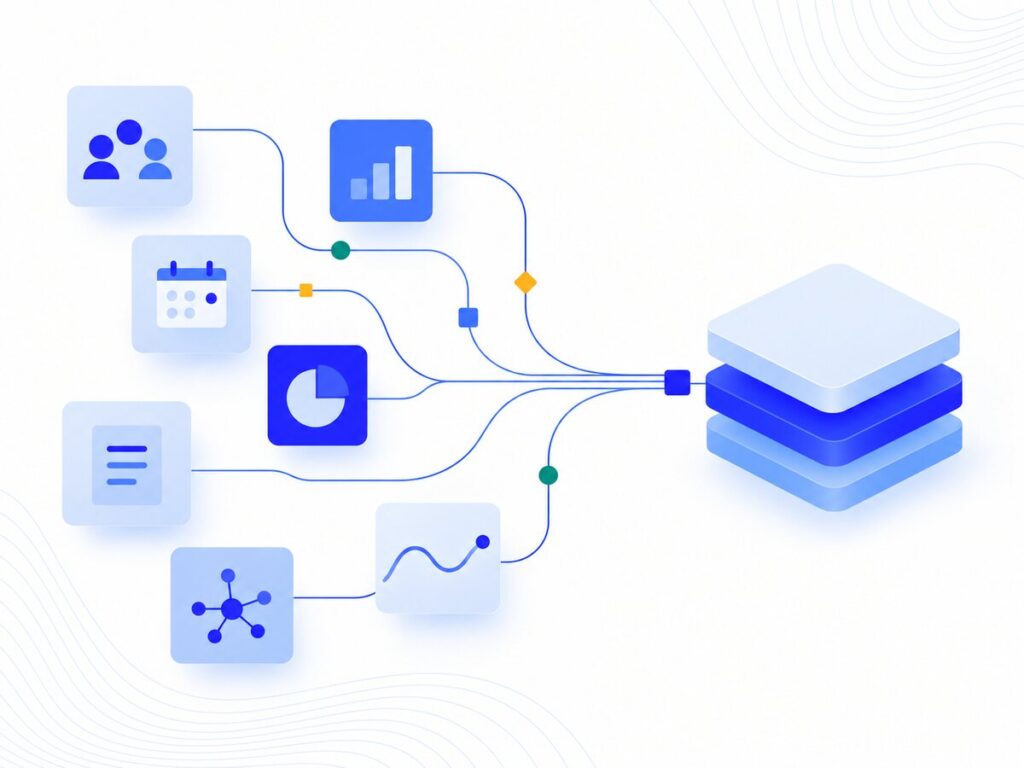
Agency financial and operational data connected through a unified intelligence foundation
Agency intelligence starts with connected, agency-native financial data.

What agency intelligence can enable

A straightforward financial question should not always require a new report, a technical query, or another request to the finance team.

With Counta AI Connector, an authorized user can ask questions in plain language. For example:

  • Which clients are trending below their target margin?
  • Show aged WIP by client and entity.
  • Compare client profitability across offices over the last 12 months.
  • Which jobs have incurred costs but have not yet been billed?
  • Summarize the most significant revenue and cost variances this quarter.

Finance gets a faster starting point for analysis. Meanwhile, account leads, project owners, operational leaders, and executives can access the financial information appropriate to their roles.

The result is more than faster reporting. It is agency intelligence made accessible across the business.

Agency finance teams spend a significant amount of time extracting information, manipulating spreadsheets, packaging reports, and responding to follow-up questions. Then the data changes, and the process starts again.

Counta AI Connector can reduce that friction. An approved AI tool can retrieve the relevant Counta information, then help summarize, compare, or explain the results.

A finance leader might investigate a change in client profitability. An operations leader could review utilization and resource trends. Before a quarterly business review, an account lead could examine the financial position of a client portfolio.

Instead of starting with a blank report, teams can start with the business question.

Here is one of the most important distinctions of Counta AI Connector: the AI does not have to invent the financial logic.

When an AI tool requests client profitability, job cost and billing, aged WIP, or other supported information, Counta applies its established reporting logic. The AI supplies relevant parameters, such as client, office, job, entity, or reporting period. Counta then returns the appropriate information.

In other words, the AI does not reconstruct agency accounting concepts from raw data or independently decide how to calculate margin, WIP, or revenue.

It starts with the financial foundation the agency already uses.

Financial information becomes even more valuable when teams can consider it alongside data from the agency’s wider technology environment.

An approved AI tool may also combine Counta context with information from project management, CRM, HRIS, media, or other connected systems. This opens the door to questions that cross traditional system boundaries.

For example:

  • How does the current project scope compare with the approved estimate and actual costs?
  • Which new-business opportunities resemble the agency’s most profitable existing clients?
  • Are resource plans aligned with expected revenue and delivery requirements?
  • Which client or job-level variances require attention before month-end?

Agencies do not need another isolated reporting destination. They need reliable financial context available within the AI tools and workflows their teams are beginning to use.

Counta AI Connector also creates a foundation for AI-assisted operational work.

Authorized users can retrieve live operational information across supported areas of Counta. They can also complete approved actions, including creating and updating time entries and creating, updating, or deleting jobs. Counta validates the information against existing settings, while each user remains within their established permissions.

This is an important progression. AI can move beyond explaining information and begin assisting with controlled, everyday work.

The broader opportunity is to help agency teams move more efficiently from a question to an insight, and then to the appropriate approved action.

One connection to the agency’s financial and operational foundation

Counta AI Connector is built on the Model Context Protocol (MCP), an open standard that allows AI applications to connect with external data sources, tools, and workflows.

It provides approved AI tools with a governed connection to supported Counta data and workflows. Through that connection, teams can retrieve current information, use Counta’s established business logic, and complete authorized actions without creating a separate AI data model.

Governed access is foundational

Connecting AI to financial data requires more than technical access. It requires control. Who can see the information? Which actions can they take? And do the same rules apply when they work through an AI tool?

Counta AI Connector works within the agency user’s existing Counta permissions. It does not give an AI assistant unrestricted access to financial information or create a separate set of user rights.

AI questions passing through governed access to produce actionable agency insights

Each person remains subject to the same access controls that govern their work in Counta.

That matters for any agency. It is especially important for organizations operating across multiple offices, entities, currencies, and brands. They may need to segment financial visibility carefully while still supporting consolidated analysis.

AI becomes far more valuable when it can reach the right information. But that value depends on the right governance being in place.

Building the financial foundation for agency AI

Let’s be clear: AI will not create financial accountability on its own. It cannot compensate for disconnected processes, inconsistent data, or systems that do not reflect how an agency actually operates.

Connect AI to structured, governed, agency-native financial data, however, and it can surface insights faster, reduce reporting bottlenecks, improve collaboration, and support better-informed decisions.

That is the foundation of practical agency intelligence – and what Counta AI Connector is designed to enable.

It connects the AI tools agencies are adopting with the financial intelligence already running their business. That is how AI moves from a standalone experiment to a practical extension of the agency’s operating platform.


See how Counta AI Connector brings agency-specific financial data, reporting logic, and approved workflows into the AI tools your agency team already uses.


Categories
Customer Stories

[Video] Steve Syckes of National Media talks about the benefits of a modern and integrated financial management platform

National Media is a media buying agency specializing in political, advocacy, and corporate reputation campaigns. In this video, National Media’s Controller, Steve Syckes, talks about migrating from a legacy accounting platform to Accountability and the benefits his agency has gained since transitioning.

Categories
Customer Stories

Dawn Marketing leaders discuss the role of Accountability in their financial and technology transformation

Dawn is the portfolio of best-in-class, specialist, marketing services agencies with centralized data science, advanced analytics and econometric measurement at the core.

Accountability is the financial management platform of record for Dawn Marketing agencies Crossmedia and Barkley.

Crossmedia CFO, Ramesh Rajan and Barkley SVP of Technology, Lambert Tomeldan talk about the catalyst for their financial transformation and share the criteria they used to select their long-term ERP partner.

Ready for financial transformation? Say hello to info@counta.com

Categories
Blog

Art + Science + Cashflow: ERP-enabled financial accountability for media agencies

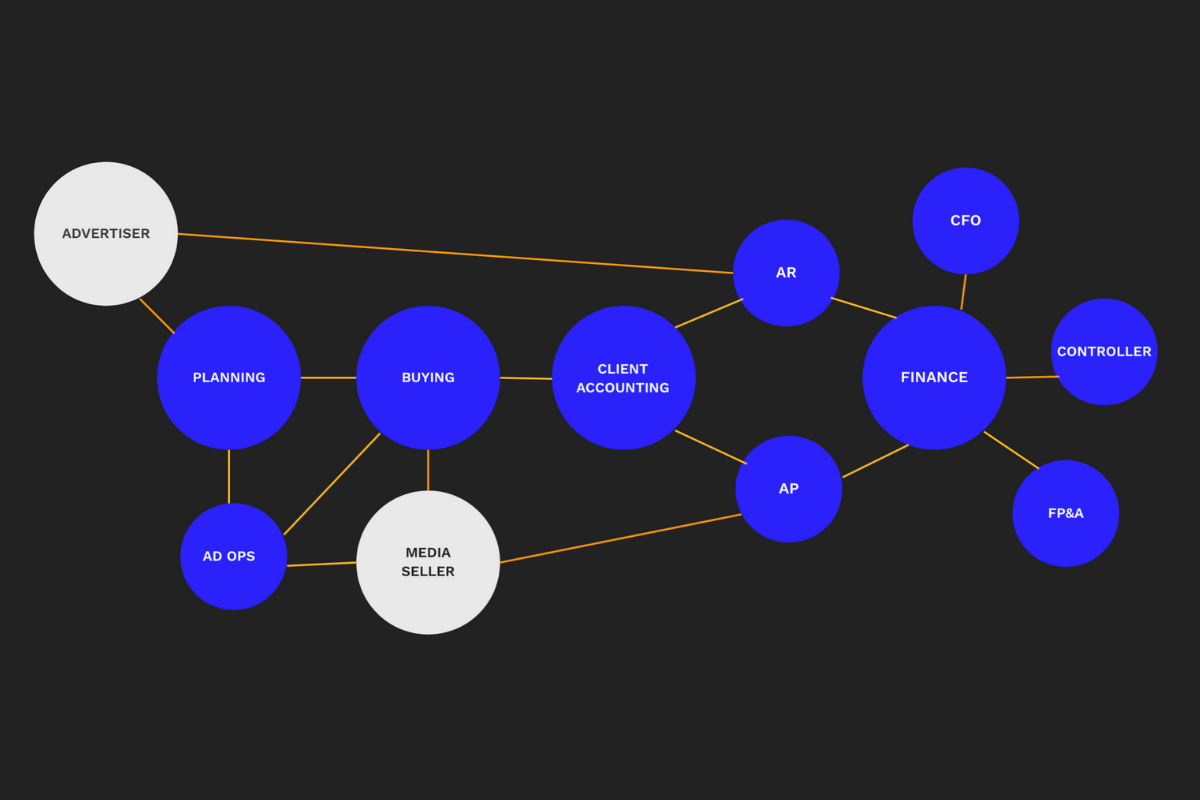
Media buying is both an art and a science. As an art, it requires the best medium to effectively relay a message to the brand’s target audience. Amidst the explosion of content and fragmentation of media channels, choosing a brand-suitable environment is imperative in connecting with that audience. As a science, media buying has expanded from ratings and impression counting to programmatic execution and dynamic targeting. New technologies and an increasingly competitive landscape has made the coalescence of art and science a critical focus for agencies and all players in the media buying ecosystem. Regardless of whether a media buying unit is a stand-alone business or part of a full-service agency, multiple groups are involved in launching an advertiser’s media campaign. In a process that typically requires information hand-off across departments – from planning, buying, client accounting, and finance – there’s a greater risk of things slipping through the cracks and thus affecting the company’s credibility and its bottom line.When it comes to the agency bottom line and financials of media buying , who is accountable? The answer is not as straightforward as it may seem. With each department focused on their specific deliverables, perhaps it’s time to zoom in on the media buying process to help clear things up.

Financial accountability in the media buying workflow

An agency needs to flawlessly execute a brand’s marketing strategy, pitch and win new business, keep up with the latest innovations, all while running a profitable business. Without a communication process in place, something will surely get lost in translation. This requires the front of the house – account leads, planners, and buyers – to communicate effectively and continuously with the back of the house – the finance team. An agency novice might designate the finance team as the sole accountable party for “managing the money.” Let’s work backwards and unpack the media buying workflow debunk this view.

Back of the house

  • The AR or Accounts Receivable team ensures that the client is billed for the agency’s work and that the agency gets paid on time.
  • The AP or Accounts Payable team is responsible for managing all vendor payments. Whether that’s the media seller, 3rd party technology provider, or data company that the agency used to execute a media campaign, AP’s job is to make sure these parties get paid.
  • The CFO is often involved in the “pay when paid” approval process to ensure that cash has been received from the client before disbursing payments to vendors used in a specific campaign.
  • A separate Client Accounting team coordinates client billing and vendor invoice management at larger media buying agencies and is the conduit between the back and front of the house.

Front of the house

The buck doesn’t stop with the finance teams.

  • How can the AR team know what to invoice the client if the media buyers have not communicated what they’ve purchased?
  • How would the AP team know the agency’s vendor liabilities if they don’t see the insertion orders that the media buying team has executed?

The buck doesn’t stop with the media buying team either.

  • How does the buyer know how much to spend on digital vs. traditional media channels or the KPIs against specific markets unless the media planner communicates what has been approved by the advertiser?
  • How would the AR team know of an incremental budget to be billed to the client in advance of media buys unless the account lead shares the approved amount?

Agency accountability chain

Let’s say that the front of the house and the back of the house are fully coordinated, but the ad operations team did not get creative instruction changes out in time or had missing tags in the ad server. In this scenario, nothing runs and no one gets paid. We can think about this interconnected web of people and processes as the agency accountability chain. One broken link, and the whole thing is compromised. The agency accountability chain starts with the advertiser and is linked to all vendors that have been contracted to execute a media plan. The industry is obsessed with innovations in contextual targeting, reach deduplication, cross-screen engagement, and AI-enabled buying automation. All important and exciting advancements, but proper agency management systems and financial operations are needed to ensure that accelerated growth plans can scale without sacrificing cash flow.

Benefits of a best-of-breed financial management platform

Financial management is the most critical area that Enterprise Resource Planning (ERP) platforms must solve for agencies. A sea of options exists to effectively “follow the money” from plan to pay, but an agency-native ERP specializing in financial management comes with turnkey solutions to scale any media buying operation.

Media platform interoperability

A best-of-breed financial management solution is fluent in the media campaign structure and designed to integrate with best-in-class media buying platforms. It is architected to:

  • Capture the most granular level of details from an agency’s media platform of choice
  • Have a flexible sub-ledger account mapping to track media costs down to the media type or media group as needed
  • Communicate critical financial milestones like cash receipts and payment disbursements back to the media platform to give media stakeholders real-time visibility into their cash position

Flexible organization and master data structure

A best-of-breed financial management solution supports a multi-office and multi-entity agency. It is built with:

  • Master data management that is aligned with how media costs need to be dissected and reported back to the advertiser
  • Agency-defined fields with customizable lists, so agencies can quickly analyze activities across their organization, track revenue across advertiser industry verticals, and report on spending across a diverse list of suppliers
  • Multi-currency and localization capabilities so each office can operate efficiently without sacrificing global reporting requirements

Workflow automation

An agency-native ERP focused on financial management understands that the less time the agency spends on administrative tasks, the more time is spent on high-value activities like strategy and analysis. Operational efficiencies are gained with:

  • Automated reconciliation of media costs and billing
  • At-a-glance financial summary as soon as the client is billed and a vendor invoice is cleared for payment in the media system
  • Access to media transactions without leaving the platform
  • Pre-built integrations with automated payment tools

Agency and integration expertise

An ERP platform provider specializing in financial management also serves as the agency’s financial management integration specialist, eliminating 3rd party fees, costly customization and timing dependencies. Just as the agency accountability chain will break if a link is missing, the agency’s advertising technology stack is not complete without a financial management platform built specifically to handle the agency business.

Art + Science + Cash flow is the new media buying equation

The advertising industry is ever-evolving, and innovations around the art and science of media buying will continue to take center stage. However, advancements in media buying cannot fully progress without taking financial operations into account. Art + Science + Cashflow is the new media buying equation, and an integrated media finance platform is foundational in solving it.To learn more, watch Accountability’s Agency Finance Master Class on-demand or request a demo of Accountability’s financial management platform.

Categories
Blog

[Webinar] Art + Science + Cashflow

Media buying is both an art and a science. The coalescence of these disciplines has inspired advertising technology advancements and made it easier to connect with an advertiser’s target consumer. However, the equation is incomplete. As an agent of the advertiser, the agency needs to balance ROI for its client and its own business. 

In our Agency Finance Master Class: Art + Science + Cashflow, Accountability’s Joanne Miguel is joined by media accounting expert and Freewheel’s Michele Knickrehm to discuss the crucial role of financial operations and cash flow management in the media buying workflow. Watch the webinar on-demand to learn more about:

  • Financial accountability from brief to pay
  • Client media billing and the evolution of pricing models 
  • Media convergence and payment automation trends
  • Things to look for in an integrated media finance platform