Categories
Blog

The Agency Stack Is Only as Strong as Its Financial Core

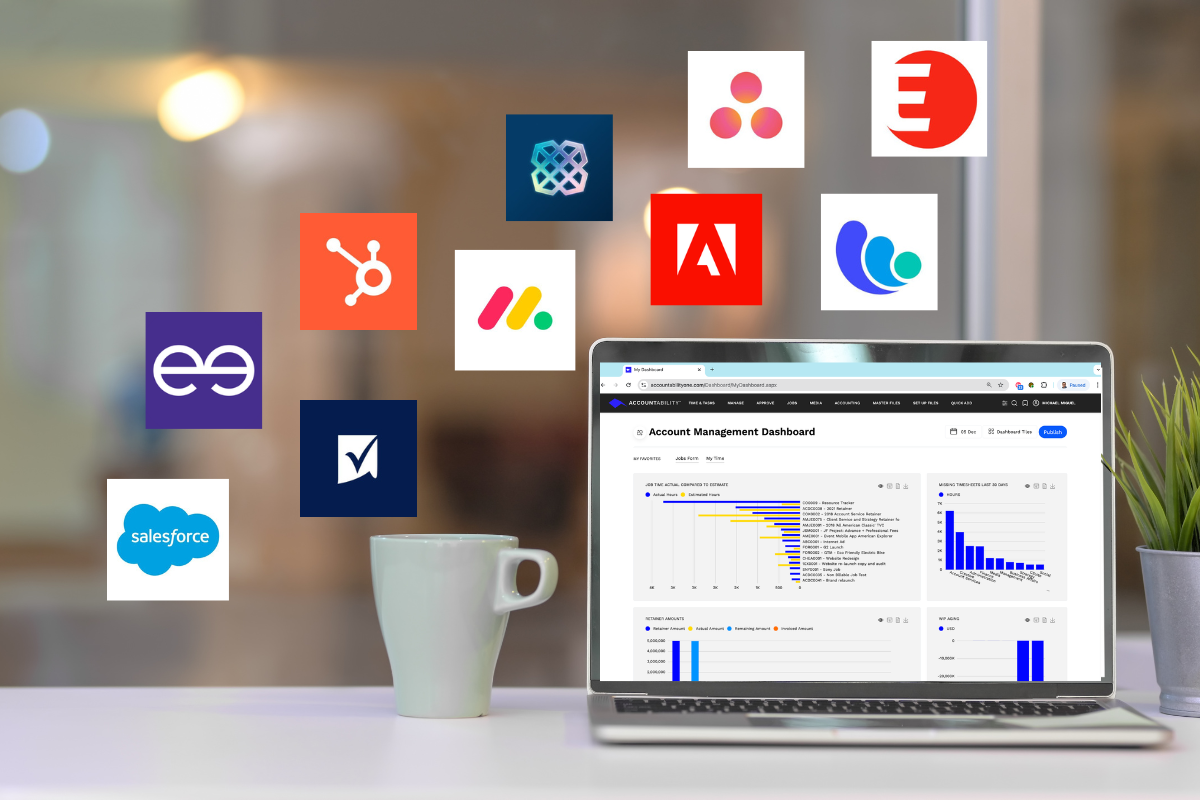
Modern agencies do not run on a single system.

They run on a stack.

  • CRM
  • Project management
  • Media platforms
  • Reporting and analytics tools

The problem is not tool sprawl.It’s that most agency stacks are built on a weak financial core.

Integration Does Not Create Clarity. Structure Does.

Most platforms promise integration.

Data syncs. Dashboards populate. Automations fire.

But integration alone does not create clarity.

If the underlying financial data is not structured around how agencies actually operate, every connected system inherits that confusion.

  • Jobs without real margin context
  • Time without WIP intelligence
  • Revenue without reliable timing

Many agencies still rely on spreadsheets even after investing heavily in modern tools.

Industry analysts, including firms like Gartner, consistently point out that automation and analytics initiatives fail when source systems lack clean, well-defined data models. When the foundation is weak, integration only accelerates inconsistency.

Why Finance Has to Be the Source of Truth

In agencies, finance is not just a reporting function.

  • It is where delivery meets revenue.
  • Where time turns into margin.
  • Where forecasts become commitments.

When financial systems are not job aware, everything else becomes interpretive.

  • CRM forecasts fail to tie back cleanly.
  • Project systems cannot explain profitability.
  • Analytics tools visualize numbers without context.

The stack stays busy, but confidence disappears.

What Changes When the Core Is Built for Agencies

When a financial platform is designed specifically for agency operations, the stack behaves differently.

  • Jobs are consistent across systems.
  • Time, expense, billing, and revenue flow into a single model.
  • Margin is calculated once, not reconciled repeatedly.

Integration starts to compound value instead of complexity.

Agency finance leaders frequently highlight this shift in verified reviews on platforms like Capterra, pointing to improved confidence in reporting and reduced manual intervention once financial data is structured correctly at the source.

Automation Fails Quietly When the Foundation Is Wrong

Automation rarely fails with errors.

It fails with assumptions.

  • If jobs are not clearly defined, automated reporting misleads.
  • If WIP is inaccurate, forecasts drift.
  • If margin logic lives outside the system, analytics become decorative.

This is why agencies often describe automation initiatives as promising but unreliable.

  • The issue is not ambition.
  • It is architecture.

Accounting and professional services publications, including the Journal of Accountancy, regularly emphasize that reliable analytics depend on disciplined financial structure long before dashboards or AI enter the picture.

The Modern Agency Needs a Financial Backbone, Not Another Tool

The strongest agency stacks do not revolve around the loudest tool.

They revolve around the most reliable one. A financial backbone that:

  • Understands agency workflows natively
  • Connects cleanly to the rest of the stack
  • Produces structured, trustworthy data

When finance is right, everything else accelerates.

  • Not because there are fewer tools.
  • But because those tools finally agree.

Stop reconciling your stack. Start trusting it.

See how a purpose-built agency financial platform transforms integration into clarity.

Categories
Blog

Built for Agencies Beats Configured for Agencies

After years of working around generic business software, many agencies reach the same conclusion:

Configuration is not the same as design.

  • Most platforms promise flexibility.
  • Agencies experience compromise.

The Configuration Trap

Generic business platforms are designed to serve many industries at once. Manufacturing. SaaS. Retail. Professional services.

When agencies adopt them, the promise is familiar:

“We can customize that.”
“There’s a module for this.”
“We’ll configure it during implementation.”

And technically, that is true.

Generic platforms can be configured.

But configuration only changes the surface. Underneath, the system is still built on assumptions that do not reflect how agencies actually operate.

  • Jobs become approximations rather than first-class objects.
  • Work-in-progress becomes a workaround instead of a core workflow.
  • Margin requires interpretation rather than visibility.

This pattern appears consistently in aggregated reviews on independent platforms like Capterra, particularly when agencies evaluate broad ERP systems positioned for professional services.

Why Configuration Slows Agencies Down

When agency logic is not native to the platform, teams compensate.

That compensation shows up as:

  • Custom fields layered on top of generic objects
  • Reports designed to explain the numbers rather than reveal them
  • Spreadsheets used to validate what the system produces

Over time, the system technically works. But confidence erodes.

Leadership starts asking questions that should already be answered:

Is this margin final?
Does this include WIP?
Which version of the forecast is correct?

This is not an execution problem. It is a design problem.

Industry analysts have long noted that professional services organizations struggle when ERP systems are not aligned to their delivery model, particularly around job costing and revenue recognition. This theme appears consistently in research from firms like Gartner and accounting publications such as the Journal of Accountancy.

What Built for Agencies Actually Means

Purpose-built agency platforms start from a different place.

They assume:

  • Jobs are the unit of work
  • Time and people are the primary cost drivers
  • Work-in-progress is constant, not exceptional
  • Margin must be visible while work is happening

When these assumptions are native to the system, everything downstream becomes simpler.

  • Implementation moves faster because workflows already exist.
  • Reporting requires less explanation because the data model matches reality.
  • Finance teams spend more time analyzing and less time reconciling.

This is why agency finance leaders consistently cite speed to go-live and clarity of reporting in verified reviews of Accountability on Capterra.

One agency controller described the difference after moving away from a generic system:

“Once live, we were able to focus on analysis rather than manipulating detail.”
Verified Capterra Review, Controller

That shift from manipulation to insight is the real outcome of purpose-built design.

Speed Comes from Fit, Not Shortcuts

There is a common misconception that faster implementations mean cutting corners.

In practice, long implementations are usually a signal of misfit.

When software must be heavily customized to reflect agency reality, timelines stretch. External consultants multiply. Risk increases.

Purpose-built platforms move faster because there is less to invent.

  • The workflows already exist.
  • The data model already matches the business.
  • The system does not need to be taught what a job is.

This is why agencies regularly report go-lives measured in weeks rather than quarters when adopting platforms designed specifically for agency operations.

The Difference Is Structural

Configured systems can look like they work.Built-for systems actually do.

  • They reduce ongoing reconciliation.
  • They improve confidence in forecasting.
  • They create a cleaner financial foundation for integration and automation.

Most importantly, they give leadership a clearer view of reality without caveats or footnotes.

That clarity allows agencies to move decisively as they grow.

Closing Thought

Flexibility has value, but not when it comes at the expense of clarity.

For agencies, the real advantage is not software that can be bent into shape.

It is software that already understands the shape of the business.

Categories
Blog

Generic Software Puts Agencies at a Structural Disadvantage

Most agencies don’t believe they have a software problem.

  • They have systems in place.
  • They close the books.
  • They produce reports.

Yet many agencies are operating with a structural disadvantage embedded directly into the platforms they rely on—not because their teams are underperforming, but because the software was never designed for how agencies actually work.

The Problem Isn’t Performance. It’s Misalignment.

Most business platforms are built to serve many industries at once. Manufacturing. SaaS. Retail. Professional services.

Agencies are expected to adapt.

  • Jobs are flattened into generic “projects.”
  • Work-in-progress is treated as an edge case rather than a core workflow.
  • Margin visibility depends on interpretation, manual adjustments, and spreadsheets outside the system.

Over time, finance and operations teams spend more energy explaining the agency business model to the software than using the software to run the business.

This disconnect shows up consistently in independent reviews on platforms like Capterra, particularly when agencies evaluate broad ERP systems such as NetSuite.

Generic Platforms Don’t Break. They Blur.

Generic platforms rarely fail in obvious ways.

  • They don’t crash.
  • They don’t stop producing reports.

Instead, they blur reality.

  • Revenue looks correct, but timing is off.
  • Margins appear healthy—until they aren’t.
  • Forecasts come with caveats, footnotes, and follow-up explanations.

Across independent ERP reviews, agency leaders frequently cite:

These platforms are not “bad software.” They are doing exactly what they were designed to do: support many business models at once.

For agencies, that generalization becomes friction.

What Changes When Software Is Built for Agencies

When platforms are designed specifically for agencies, the experience changes fundamentally.

That difference is visible in customer reviews of Accountability on Capterra, where agency finance leaders consistently point to fit, speed, and clarity as defining factors.

A controller at a mid-sized agency shared their experience after abandoning a failed generic ERP implementation:

“After spending nearly six months working with a system that never made it off the ground, we were apprehensive to attempt another installation. AccountAbility told us we could be up and running in six weeks. We were doubtful. They exceeded our expectations.”
— Verified Capterra Review, Controller

Another finance leader described the impact of moving to a platform designed around agency workflows:

“We had grown beyond the capabilities of our simple system and couldn’t capture WIP at a client, brand, and job level in an expedient manner. Once live, we were able to focus on analysis rather than manipulating data.”
— Verified Capterra Review, Controller

Across reviews, consistent patterns emerge:

These aren’t edge cases. They’re structural outcomes.

How Agencies Actually Operate – and Why That Matters

Agencies operate on:

  • Jobs as the true unit of work
  • Time and people as primary cost drivers
  • Constant margin pressure that shifts daily
  • Complex billing across clients, offices, and legal entities

Software that treats these realities as exceptions forces teams into workarounds.

Purpose-built agency platforms don’t require translation.

  • They treat jobs as first-class objects.
  • They make WIP central, not bolted on.
  • They show margin as work happens, not after the fact.

That difference isn’t cosmetic. It’s structural.

Why This Matters Now

As agencies scale, misalignment compounds.

  • More clients.
  • More jobs.
  • More delivery complexity layered onto systems that were never designed to support it cleanly.

Eventually, growth exposes the mismatch.

  • Forecasting becomes harder.
  • Finance becomes a bottleneck.
  • Confidence in the numbers starts to erode.

The agencies that move faster aren’t working harder. They remove friction at the foundation. They choose platforms built around agency operations-not generic business assumptions.

Generic software doesn’t fail agencies outright. It quietly limits them.

Agencies that want clarity, confidence, and controlled growth start by fixing the foundation their business runs on.

Is your software aligned with how your agency actually operates?


Assess whether your current system is helping you see reality—or blurring it.

Categories
Blog

From Onboarding to Expansion: How We Stay Hands-On as You Scale

ERP horror stories usually end with one phrase:

“They got us live—and then disappeared.”

If you’ve been through a traditional software rollout, you probably know the routine:

  • The onboarding team is great… until week 12.
  • The support handoff is vague at best.
  • Your team starts asking, “Are we supposed to figure this out ourselves now?”

We’ve heard these stories. That’s why we built our implementation and support model differently.

We don’t vanish at go-live. In fact, we’re just getting started.

Growth Isn’t the Finish Line—It’s the First Step

You didn’t invest in a modern financial platform to solve a single problem. You invested because your agency is evolving:

  • Growing client portfolios
  • Expanding into new markets
  • Navigating more complex billing models
  • Scaling operations across teams and geographies

The systems you rely on need to keep pace. And so do the people behind them.

Our Hands-On Support Model: What It Really Looks Like

Here’s how we stay involved long after the onboarding champagne is gone:

1. A Customer Success Team That Knows Your Business

Our Customer Success team isn’t just a support inbox.

They’re proactive, strategic partners who:

  • Know how your agency works
  • Understand your growth goals
  • Anticipate needs before they become issues

You’re not explaining your business every time you have a question. You’re talking to someone who already gets it.

2. Strategic Check-Ins, Not Just Ticket Replies

Post-launch support shouldn’t be reactive.

We schedule regular reviews to look at:

  • Platform performance
  • New workflow needs
  • Feature adoption
  • Opportunities to optimize based on how your agency is evolving

Think of it as ongoing calibration, not crisis control.

3. Guidance Through Growth Phases

As your agency grows, your needs will shift.

  • Adding new entities? We’ll help you structure for global scale.
  • Changing billing models? We’ll guide your team through it.
  • Expanding reporting requirements? We’ll help you build dashboards that flex.

We don’t just answer questions. We help you grow smarter.

4. Continuous Feature Education (Without the Overwhelm)

New features and updates are only valuable if your team knows how to use them. We offer:

  • Targeted updates when functionality matches your needs
  • Walkthroughs tailored to your workflows
  • Best practices drawn from our agency client network

No overwhelming product dumps. Just the tools you need, when you need them.

We Scale With You—Not Away From You

The truth is, software alone doesn’t solve problems.

Software + strategy + support = long-term success.

We stay close so that:

  • You never feel abandoned post-launch
  • You have a direct line to people who understand your context
  • You can adapt quickly as your agency grows

Because sustainable growth doesn’t happen with tools alone. It happens with partnership.

Already thinking past go-live? Good. So are we.

See how our financial platform—and our people—support your agency through every stage of growth.

Categories
Blog

What High-Touch Implementation Really Looks Like

“High-touch implementation.”

Sounds impressive, doesn’t it?

But too often, it means a few templated emails, an onboarding portal, and a 90-minute kickoff call that ends with you thinking,

“Wait—aren’t we doing most of the work here?”

We’ve been there. That’s why we’ve built our onboarding model differently—specifically for agencies.

Because when your agency is growing, your implementation experience should support that momentum, not stall it.

High-Touch: Often Promised. Rarely Delivered.

Let’s decode what “high-touch” usually means:

  • A series of standing calls with vague agendas
  • An account manager who shows up at kickoff and disappears after week three
  • Long delays while “custom requirements” are routed to developers
  • A delivery team that asks you how your agency operates—because they’ve never worked with one before

In other words: high-touch in name, low-impact in practice.

So What Does Real High-Touch Look Like?

It’s not about more meetings. It’s about meaningful involvement and tailored support that helps your agency go live faster—and smarter.

Here’s what we believe high-touch implementation really means:

1. A Delivery Team That Knows Agencies

You won’t spend time explaining what utilization means, how time tracking works, or why creative projects don’t follow rigid workflows. Our team speaks fluent agency—because we’ve worked with hundreds of them.

You’ll work with experts who know:

  • How to align financial workflows with delivery
  • How to handle multi-entity and multi-currency needs
  • What realistic reporting should look like for a fast-moving agency

2. A Strategic Plan from Day One

We don’t wing it. From kickoff, you get a clear project timeline, milestones, and deliverables.

Our onboarding follows an agile, structured model that typically looks like:

  • Week 1–2: Discovery & planning
  • Week 3–6: Configuration & integrations
  • Week 7–10: Testing & training
  • Week 11–12: Go-live & post-launch support

It’s fast, but it’s not rushed. It’s focused, but it flexes with your needs.

3. Customization Without Complexity

You need systems that match your workflows—not the other way around. We bring pre-configured agency templates, but we also tailor them to how your agency operates.

Need a unique billing model or a custom approval flow? Done. No tickets. No multi-week delays.

4. People Who Stay Involved After You Go Live

Our definition of high-touch doesn’t end at launch.

We stay with you to ensure:

  • Your team actually adopts the system
  • Dashboards and reports are useful—not just there
  • Integrations work as expected
  • You’re set up for scale, not just survival

Support doesn’t drop off a cliff after the invoice is paid.

Why This Matters for Growing Agencies

Implementation isn’t just a tech process—it’s a critical moment for finance and ops leaders.

Get it right, and you accelerate:

  • Billing
  • Forecasting
  • Client profitability tracking
  • Strategic decision-making

Get it wrong, and you’re back in the spreadsheet jungle, trying to stitch together systems that never worked well to begin with.

We Don’t Do “Set It and Forget It”

Some platforms get you live, hand you the keys, and vanish.

We don’t.

We stay close because growing agencies need more than software—they need a partner who can keep up with their pace, adapt with their business, and flag issues before they become problems.

If you’ve been burned by “high-touch” before, we get it. Let’s do it right this time.

See how we implement fast, stay engaged, and support your agency from onboarding to scale.

Categories
Blog

Growth Without Chaos: Scaling Agencies Need This Kind of Support

In the agency world, growth is the goal. Bigger clients. More projects. New regions.

But let’s be honest—growth doesn’t always feel like a win from the inside.

It feels like:

  • “We need three new trackers just to manage this client.”
  • “Do we have enough people to staff this pitch?”
  • “Finance has no idea what’s been delivered—or billed.”

The systems that worked when you were 20 people can start to crack at 50, and completely fall apart at 100.

That’s not bad luck. It’s a sign your operations aren’t scaling with your agency.

Why Growth Turns into Chaos (If You’re Not Careful)

Scaling creates complexity—and complexity, if unmanaged, turns into chaos.

Here’s what usually happens:

  • More clients = more project variability
  • More people = more tools, workflows, and communication gaps
  • More revenue = more pressure on finance to track, bill, and forecast

And suddenly, leadership is stuck reacting instead of planning.

You’re growing, but you’re not in control.

What Scaling Agencies Actually Need

The answer isn’t more tools—it’s smarter systems and stronger support.

If you want to grow without chaos, you need:

1. A Financial Platform That Grows With You

You shouldn’t have to rebuild your tech stack every time you add a new client or region. A modern financial management platform should support:

  • Multi-entity and multi-currency operations
  • Complex billing models and scopes
  • Automated revenue recognition
  • Real-time margin visibility at the project, client, or portfolio level

Because scaling means more decisions—and they can’t wait on disconnected spreadsheets.

2. Integration with the Tools You Already Use

Growth usually comes with tool sprawl. You’re using Salesforce here, a PM tool there, Slack everywhere.

You need systems that connect, not compete.

Look for platforms that offer:

  • Pre-built integrations
  • Open APIs
  • Real-time data sync

That way, your workflows scale—not your manual effort.

3. Operational Visibility in Real Time

As teams grow and delivery gets more complex, you can’t rely on last month’s report to make this week’s decision.

You need:

  • Live dashboards
  • Rolling forecasts
  • Automated alerts for margin risks, overdue billing, or resourcing gaps

It’s not just about knowing what happened. It’s about knowing what’s happening now—and what’s coming next.

4. A Partner That Scales With You

Off-the-shelf tools won’t cut it when your business keeps evolving. You need a support model that offers:

  • A dedicated delivery and success team
  • Industry expertise specific to agencies
  • Guidance that evolves as your agency does

It’s not just about keeping the lights on. It’s about helping you see what’s around the corner.

Growth Is Only a Win If It’s Sustainable

We love growth stories—but the real win is growing without losing visibility, accuracy, or control.

If your systems are barely holding together now, they won’t survive the next wave of growth. And duct tape only lasts so long.

The good news? You don’t need to overhaul your business to scale.

You just need the right support in the right places.

Ready to scale without the chaos?

See how our financial platform helps growing agencies stay in control—across clients, teams, and regions.

Categories
Blog

The ERP Onboarding Experience You’ll Actually Enjoy

The ERP Onboarding Experience You’ll Actually Enjoy

Yes, we know how that sounds.

“ERP onboarding” and “enjoyment” don’t usually appear in the same sentence—unless there’s a punchline involved. For most agencies, ERP implementations fall somewhere between a root canal and assembling flat-pack furniture with missing instructions.

  • It takes too long
  • It costs too much
  • No one really knows what’s going on
  • And by go-live, everyone’s burned out

You probably have onboarding scars to prove it.

But we’re here to say: it doesn’t have to be that way.

The Problem with Traditional ERP Onboarding

Let’s review the usual suspects:

  • The endless scoping phase (“We just need one more workshop…”)
  • The army of consultants who bill by the hour and speak fluent jargon
  • The change management emails no one reads
  • The mysterious spreadsheet migration that takes two months and still doesn’t map right
  • The dreaded go-live day that feels more like a systems funeral than a celebration

This is what happens when you try to make a legacy platform fit a fast-moving agency. It’s like forcing a square peg into a moving target.

We do things differently.

How We Make ERP Onboarding Enjoyable (Yes, Really)

Our approach is simple: stop making onboarding harder than it needs to be.

Here’s how we do it:

1. We Don’t Start with a Blank Page

You’re not the first agency we’ve worked with. That means we’re not “workshopping” basic workflows you figured out years ago.

We bring:

  • Pre-configured templates for agency billing models
  • Dashboards and workflows that reflect how you work
  • Clear plans, not vague discovery decks

2. We Speak Fluent Agency (Not ERP-ese)

No jargon. No condescending training videos. No “synergized enablement.”

Just real conversations about how to get your data flowing, your team working, and your margins visible.

We meet your teams where they are—whether they live in project management tools, time trackers, or spreadsheets held together with hope.

3. Our Timeline Is Measured in Weeks—Not Quarters

We go live in 90 days or less. Because you have better things to do than wait half a year for your billing system to work.

And no, “go live” doesn’t mean “you’ll sort of be live but still need three more sprints.” We mean actually live—using the platform, sending invoices, pulling real reports.

4. Our Delivery Team Doesn’t Vanish

Some vendors hand you off to a “partner” and wish you luck. Ours walks with you from kick-off to go-live and beyond.

Need to adjust a workflow? Sync a new integration? Translate a finance goal into a dashboard? We’re on it. No ticket queues. No ghosting.

Still Skeptical? We Don’t Blame You

You’ve been promised “seamless onboarding” before. So have we. That’s why we built this platform—and this onboarding model—for the agency people who actually have to use it.

It’s fast. It’s clear. It works.

And you might just enjoy it enough to tell your friends. (Yes, even the ones in finance.)

Signs You’re Ready for an Enjoyable ERP Onboarding

  • You’re tired of duct-taping together spreadsheets and systems
  • You’re done with consultants who charge extra just to read your emails
  • You want your ops and finance teams to actually like the new system
  • You’d prefer onboarding that doesn’t feel like a never-ending group project

If that’s you—we should talk.

Ready for ERP onboarding that doesn’t require snacks, therapy, or a backup plan?

See how we get agencies live in 90 days—with fewer headaches, no jargon, and zero drama.

Categories
Blog

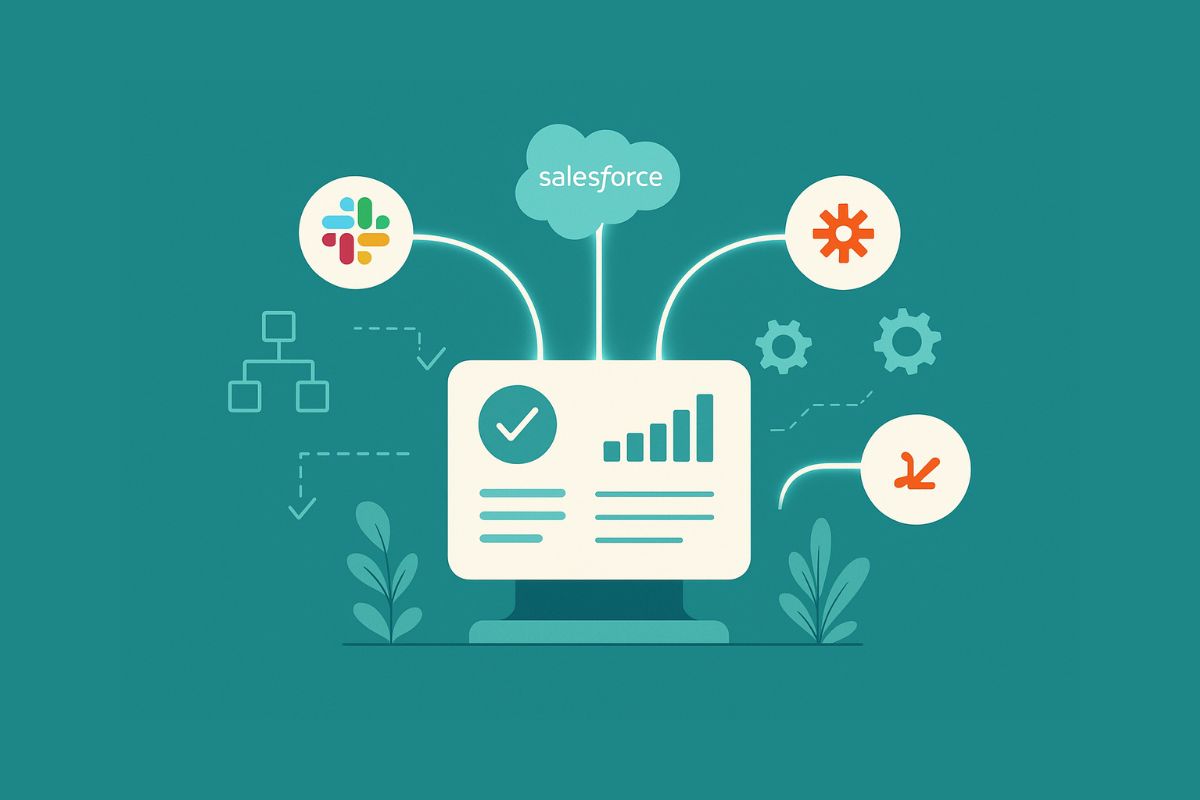
Zapier, Slack, Salesforce—How Accountability Plays Nice with the Tools You Already Use

Modern agencies aren’t short on software. From Slack to Salesforce, Monday to Harvest, your team likely has a well-stocked stack already.

The problem isn’t the tools—it’s what happens (or doesn’t) between them.

Disconnected workflows, lost context, manual data entry, late billing, and missed handoffs usually don’t happen inside a tool. They happen between them.

That’s where most systems fail.

And it’s where our platform stands apart.

The Myth of the All-in-One Platform

We’ve all seen the pitch: one platform to manage everything from project scope to payroll to ordering snacks for the kitchen.

Reality check: agencies need flexibility. You’ve chosen the best tools for CRM, messaging, time tracking, and delivery—because they’re purpose-built and your team actually likes using them.

You don’t need a new system that tries to take their place.

You need one that connects them.

Enter: Smart, Open Integration

Our financial management platform was built for agencies that already have a stack—and want to make it work better.

We don’t ask you to rip and replace. We meet you where you are.

With robust integrations and open APIs, we help you connect the tools you already use and automate the workflows you’ve been manually patching together.

Let’s break it down:

Slack: From Ping to Payment (Almost)

Slack is your agency’s heartbeat—fast, informal, and full of useful context.

We integrate with Slack so you can:

  • Send automated reminders to log time or review approvals
  • Notify finance when billing milestones are hit
  • Trigger alerts for over-budget projects, margin thresholds, or overdue invoices

Your team stays in their flow. Finance stays in the loop.

Salesforce: From Deal Closed to Project Live

CRM handoffs are a notorious black hole. But they don’t have to be.

With Salesforce integration:

  • Deals automatically generate scoped jobs with associated budgets and timelines
  • Forecasted revenue flows directly into your financial projections
  • Finance and delivery teams get visibility into what’s coming before the kickoff

No more scrambling when a project lands. Everyone’s ready.

Zapier: Because You Can’t Predict Everything

Sometimes your agency runs on less mainstream tools—or heavily customized workflows. Zapier gives you the flexibility to bridge gaps your way.

With our Zapier integration, you can:

  • Push invoice data to custom dashboards
  • Trigger task creation in PM tools when financial events occur
  • Automate time-saving tasks across dozens of apps

No code. No bottlenecks. No reinventing your tech stack.

Why This Matters for Finance and Ops Teams

This isn’t just about tech convenience—it’s about operational control.

When your systems talk to each other:

  • Billing becomes faster and more accurate
  • Margins can be monitored in real time
  • Resource allocation is driven by live data
  • Approvals and alerts happen without chasing anyone

Your finance and ops teams aren’t in the dark or lagging behind—they’re leading with live insight and automated workflows.

Integration Isn’t a Feature. It’s a Philosophy.

Our platform doesn’t bolt on a few connectors and call it a day. Integration is core to how we work.

That means:

  • Pre-built connectors for the tools agencies use most
  • Open APIs for custom workflows
  • Webhook support for real-time automation
  • Structured data that flows across systems without breaking

The result? Accountability across tools, teams, and timelines.

You already have great tools. Now make them work together.

See how our financial management platform connects Slack, Salesforce, Zapier, and more—so your agency runs faster, smarter, and with full accountability.

Categories
Blog

Taming the Spreadsheet Jungle: A Guide for Agency Ops Teams

It usually starts with a good intention.

A simple tracker for billable hours. A margin calculator. A project budget template that “just works.” But then—something happens.

One spreadsheet becomes five. Then ten. Then twenty, all with slightly different formatting, ownership, or version names like “_final_v2_LASTUSE_THISONE.”

Congratulations. You’re now managing your agency operations in a spreadsheet jungle.

And it’s slowing you down.

Why Agencies Rely on Spreadsheets (Until They Break)

Spreadsheets are flexible, familiar, and free. So it’s no surprise they’re often the go-to tool for solving urgent operational problems.

But over time, they create more issues than they solve:

  • No single source of truth — multiple versions across departments
  • Manual updates — prone to error, duplication, and omission
  • Siloed information — no visibility across finance, ops, and delivery
  • Lack of automation — reporting, billing, and approvals require extra steps

At some point, your operations team stops managing performance and starts managing files.

The Hidden Costs of Spreadsheet Sprawl

Let’s be honest: the spreadsheet jungle isn’t just messy. It’s expensive.

  • Time is lost chasing updates, consolidating data, and manually fixing errors
  • Invoicing gets delayed because time and cost data live in separate systems
  • Forecasting lacks accuracy due to incomplete or outdated inputs
  • Margin insights come too late to do anything about them
  • Risk increases as sensitive financial data gets shared across uncontrolled files

If you’re spending more time updating spreadsheets than making decisions, it’s time to reconsider your tools.

How to Replace Spreadsheets with Smarter Workflows

Moving away from spreadsheets doesn’t mean losing flexibility—it means gaining control. Here’s how leading ops teams are doing it:

1. Consolidate Data into One Platform

Instead of juggling multiple trackers, connect your delivery, time, and financial data into a single system. That means no more manual reconciliation or version control issues.

2. Automate Where It Counts

Recurring processes—like reporting, billing, and approvals—can be automated when data flows through structured systems. Free your ops team to focus on strategy, not spreadsheets.

3. Integrate with Existing Tools

Spreadsheets often fill gaps between disconnected tools. Replace that role by using a financial management platform that integrates with your CRM, PM, and time tracking tools.

4. Enable Real-Time Visibility

Dashboards and reports that update automatically give you a live picture of what’s happening—without waiting for the next spreadsheet upload.

5. Design Workflows That Scale

Spreadsheets don’t scale. What works for 5 projects doesn’t work for 50. A modern system adapts with your agency as you grow.

Why This Matters for Agency Ops Teams

Ops leaders aren’t just keeping the trains running—they’re critical to agency profitability, performance, and client satisfaction.

But when your workflow lives in scattered files and manual processes, you’re forced to operate reactively.

With the right systems:

  • You get ahead of billing, forecasting, and resource planning
  • You make decisions based on real-time data
  • You enable teams to work faster and with more confidence
  • You finally retire that “revenue-tracker-Q2_vFinal-FIXED.xlsx” file

How Our Platform Helps Clear the Jungle

Our financial management platform is designed to replace operational spreadsheets with automated, connected workflows that actually reflect how agencies work.

With it, you get:

  • Real-time reporting across jobs, clients, and regions
  • Built-in automation for billing, revenue recognition, and approvals
  • Seamless integration with your existing tools
  • A central hub for finance and ops—no spreadsheet stitching required

Ready to retire your spreadsheets?

See how our platform helps operations teams move from spreadsheet chaos to structured, scalable workflows—without losing flexibility.

Categories
Blog

Fast and Transparent Onboarding with Accountability

Adopting new agency efficiency software is a crucial financial decision, but the onboarding process often causes anxiety. Many platforms promise value but face delays and low engagement during implementation, leading to poor adoption.

At Accountability, we believe onboarding should be a catalyst that builds confidence and empowers teams from day one. We’ve invested in a proven approach to ensure a fast, transparent, and collaborative transition to our software.

How Agency Efficiency Software Ensures Smooth Onboarding

Getting started with a financial system doesn’t have to mean starting from scratch. Our onboarding process is built to align with agency workflows while reducing complexity and risk. Through a combination of structured planning, customizable tools, and real human support, we help clients hit the ground running.

Clear Project Plans That Keep Everyone on Track

A successful onboarding process starts with clarity. Our team collaborates with stakeholders to create a shared roadmap, outlining clear milestones with target dates, task ownership, and success outcomes.

This structured approach ensures all aspects are covered, from data validation to system walkthroughs and go-live preparation. The collaborative plan keeps agencies informed and engaged, eliminating uncertainty about the next steps.

Pre-Populated Templates That Speed Up Setup

Data migration is a major bottleneck when switching systems, particularly for teams moving from spreadsheets or outdated software. To ease this process, we offer pre-populated templates designed for specific data sets like vendor records, client contracts, billing codes, and time categories.

These templates minimize manual entry, ensure consistent formatting, and help teams visualize their existing data in our platform. This allows teams to focus on reviewing and deploying instead of spending weeks on reformatting.

Our experience helping agencies worldwide has shown us exactly where data migration slows down—and we’ve built tools to keep that from happening.

Personalized Training for Every Department

Effective software requires proper training. We customize our sessions for each department based on their specific workflows.

  • Finance teams focus on revenue recognition, job cost reporting, and vendor invoicing.
  • Operations teams address time capture, expense approvals, and billing cycles.

Each training is tailored to the client’s priorities and challenges, providing a relevant playbook for each team. Our experienced trainers bring real-world agency finance expertise to ensure practical, scenario-based learning.

Expert Guidance from Dedicated Implementation Specialists

Our onboarding team has successfully assisted hundreds of agencies in transitioning smoothly. Each new client is paired with dedicated implementation specialists who guide them through every phase, answer questions in real time, and provide strategic input.

This proactive guidance helps clients anticipate and avoid roadblocks, whether reconciling legacy billing models or aligning reporting structures. The result is a trusted partnership grounded in shared success.

Post-Launch Support that Doesn’t Disappear

Implementation continues beyond go-live, as real questions and refinements often arise afterward. Our support model ensures ongoing collaboration post-onboarding.

We maintain close contact with your team, monitoring progress, providing enhancements, and addressing change management challenges. As your agency evolves, we support your platform usage.

Clients also access a growing library of support resources, updates, and success tools to maximize their platform experience.

Why the Right Agency Efficiency Software Makes All the Difference

Onboarding isn’t just about flipping the switch but about building the foundation for sustainable, measurable efficiency. The smoother the setup, the faster your team can start using real-time data to drive decisions, manage costs, and forecast with confidence.

At Accountability, we’ve made it our mission to ensure that this foundation is laid quickly and clearly. With structured implementation, smart data tools, flexible training, and hands-on support, we’ve helped agencies around the world integrate our system into their operations with minimal disruption and maximum value.

When your agency efficiency software comes with an onboarding experience this transparent and supportive, the transition doesn’t feel like a hurdle—it feels like momentum.

Let’s make your transition simple, seamless, and powerful. See how quickly you can get started with Accountability.